
According to the International Civil Aviation Organization (ICAO), Africa will require over 70,000 new aviation professionals between 2025 and 2044—including 23,000 pilots and 24,000 technicians
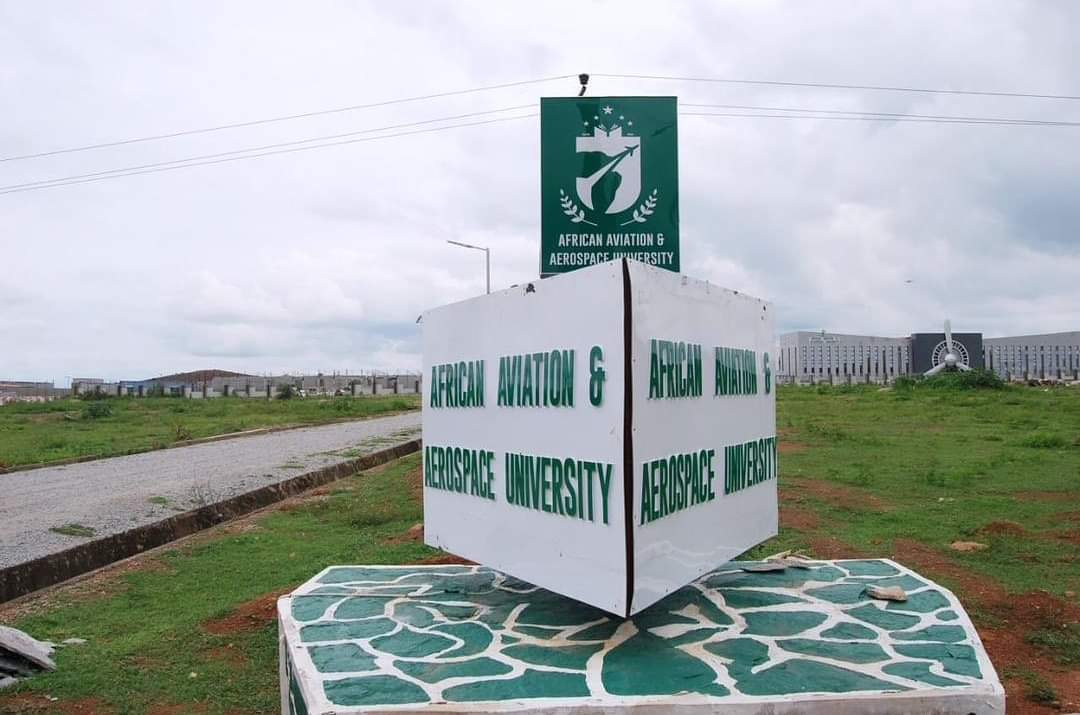
Stakeholders across Nigeria’s aviation sector have endorsed the proposed legislation to establish the African Aviation and Aerospace University (AAAU) in Abuja.
They described the aviation university as a timely response to the continent’s growing need for skilled aviation and aerospace professionals.
At a public hearing organized by the House Committee on Aviation Technology on Tuesday, participants from government, academia, and industry said the proposed university would strengthen Nigeria’s position as Africa’s hub for aviation research, innovation, and manpower development.
Representing the Minister of Aviation and Aerospace Development, Festus Keyamo (SAN), the Permanent Secretary, Dr. Ibrahim Abubakar, said the initiative aligns with the ministry’s long-term goal of making Nigeria a global aviation training centre.
He explained that the ministry initiated the AAAU in 2023 to bridge the human capacity gap in the sector and promote homegrown innovation, stressing that the proposed legislation would provide a firm legal foundation and autonomy for the institution.
“The African Aviation and Aerospace University represents more than an educational institution; it is the future of aviation manpower development on the continent,” Abubakar said.
“We commend the National Assembly for giving legislative support to this visionary project, which will consolidate Nigeria’s leadership in Africa’s aviation and aerospace sectors.”
Chairman of the university’s Governing Council, Mr. Bukar Goni Aji, said the institution had achieved significant milestones since inception and deserved full legal backing to sustain its progress.
He disclosed that the Federal Government had allocated 200 hectares of land along Bill Clinton Drive, Abuja, as the university’s permanent site, with several structures completed and relocation already underway.
“The passage of this bill will enhance confidence in the university’s credentials, attract global collaborations, and ensure sustainable funding,” Aji said.
Dr. Mustapha Sheikh Abdullahi, Registrar of AAAU, noted that the university commenced operations in 2023 with executive approval, secured accreditations from the National Universities Commission (NUC) and Joint Admissions and Matriculation Board (JAMB), and now offers over seven accredited programmes at both undergraduate and postgraduate levels.
He added that the university had trained over 300 staff from major aviation agencies, including the NCAA, NAMA, and NSIB through executive capacity-building programmes.
“Our support for this bill is total,” Abdullahi said. “It will give the legal backing needed to expand our reach, attract global partnerships, and meet Africa’s aviation manpower needs.”
Also lending support, Capt. Danjuma Ismail, Rector of the Nigerian College of Aviation Technology (NCAT), described the proposed university as a complementary institution rather than a competitor.
“While NCAT focuses on technical and professional training, AAAU will fill the academic and research gap by providing postgraduate pathways and fostering innovation,” he explained.
The Chief of Air Staff, Air Marshal Hasan Abubakar, said the Nigerian Air Force fully supports the establishment of the university, noting that aviation and aerospace disciplines demand both technical knowledge and institutional discipline.
Citing forecasts from the International Civil Aviation Organization (ICAO) and Boeing, Abubakar revealed that Africa will require over 70,000 new aviation professionals between 2025 and 2044—including 23,000 pilots and 24,000 technicians—underscoring the urgency for local capacity development.
“The establishment of AAAU is not just desirableit is imperative,” he stated. “But it must also embed discipline, compliance, and safety culture to meet global standards.”
Declaring the public hearing open, Speaker of the House of Representatives, Rep. Tajudeen Abbas, represented by Rep. Julius Ihonvbere, hailed the initiative as a “major step toward transforming Nigeria’s aviation landscape.”
“This university will equip Nigerians with advanced skills, reduce reliance on foreign training, and promote research that drives safety and innovation,” Abbas said.
Chairman of the Committee, Rep. Tajudeen Abisodun, described the bill as a historic opportunity for Nigeria to lead Africa in aviation education, research, and technology.
“This university is not just for Nigeria, it is for Africa,” Rep. Abisodun declared. “It’s a bold declaration that we are ready to lead, innovate, and educate at the highest levels.”