
The crisis of climate change is getting more real in everyday life and living as the author’s experience while spending Christmas in Bauchi reveals
Perhaps it happened years before I was born. However, I have never witnessed the 25th of December with a temperature of above 30°C in the evening; not even close to that. This year, I happened to be in Bauchi, my home state, during the time. It was quite surprising how confused people were about the weather. Early in the morning, it was forecasted to be around 38°C during the day. It happened, and we’re still in the 2025 harmattan period.
Many people I met and exchanged pleasantries with were complaining about this new dimension of the weather, often confused about what was really happening. It was very cold in the middle of December. However, as the month approached the 20th, the weather culminated into a spring-like condition.
The harmattan period, especially in northern Nigeria, usually comes with very dark, hazy dust, extreme cold, and dusty winds from beginning to end. This year, however, is totally different. I remember how I used to lock myself in my room, whether on campus or at home, keeping myself busy reading books or browsing the internet because the outside used to be almost inhabitable.
The increasing temperature in harmattan is pointing to an existential issue we often shy away from discussing: the lived reality of climate change.
Climate change is real and is indeed here with us! Let this sink.
The glaring change in temperature and overall climate conditions is not limited to only the harmattan. The 2024 rainy season came with above-normal rainfall in northern Bauchi, northern Gombe, Kano, Kaduna, Yobe, Borno, and many states in the Northwest. A nonagenarian then told me that in all his years of living, he had never witnessed rainfall as abundant as that of 2024 in Northern Bauchi.
It led to devastating disasters, including the displacement of several communities and tragic building collapses resulting in the loss of lives and property in Katagum, Jama’are, and Gamawa LGAs of northern Bauchi.
Beyond displacement and building collapses, the popular Kano-Borno road that passes through Jama’are and Katagum LGAs of Bauchi state, was partly destroyed due to incessant flooding. The last time I travelled through that road, rehabilitation work was still ongoing.
By the Nigerian standards, it may take years before the road fully regains its smoothness, as the sections of the road requiring urgent attention are quite many. The disruptions caused by the floods led to several accidents, killing many travellers and injuring others.
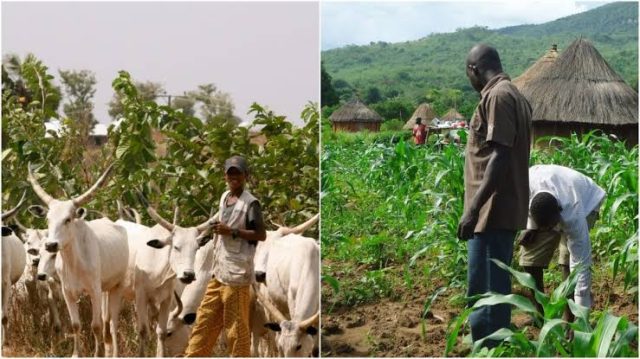
Ironically, at the time when rainfall became a serious problem in these places, areas that traditionally receive above-average rainfall, such as southern Bauchi, Adamawa, Plateau, Taraba, and other states, were battling drought and praying for rain. They also had a different season marked with devastating drought. That was how the 2024 rainy season came with a strange narrative. For the heat season, rising temperatures have, over the years, been the most obvious climate crisis experienced here.
Every shift in weather patterns comes with countless untold stories of suffering and uncertainty, especially among people living in rural and peri-urban communities. Most of them have either never heard of climate change or have observed the changes without understanding what is truly happening.
Through several community outreaches, policy advocacy engagements, and research activities, especially in hard-to-reach rural areas, I realized how far behind the majority of Nigerians are left when it comes to climate change information.
An article I recently wrote, sparked timely discussions over the obscurity of the National Council on Climate Change, having only discovered its existence in early 2025. Many people I spoke with also knew nothing about it. This tells about the urgent need for a strong climate literacy framework in Nigeria. We are fighting a serious battle that the majority of people are unaware of, even while standing on the battlefield. How can the developed climate-related policies succeed without climate literacy?
This calls for urgent action. Beyond the federal government, state governments are also not giving the climate crisis the attention it deserves. Collaborative efforts need to be in place, as all hands must be on deck for this task. Climate change in Nigeria is no longer a future problem. It is already shaping how we live, work, farm, and survive across the country. A single disruption in climatic conditions can escalate into devastating situations that threaten livelihoods, food systems, and lives.
Isah Kamisu Madachi is a public policy enthusiast and development practitioner. He writes from Abuja, and can be reached via: isahkamisumadachi@gmail.

Op-ed Editor
previous
27 Bills, One Vision: How Zamfara lawmaker is redefining legislative lmpact | SUPPLEMENT
next