
The National Revenue Service sets a revenue target of ₦40.7 trillion from taxes, royalties, and other mineral revenues
The Executive Chairman of the National Revenue Service (NRS) formerly known as Federal Inland Revenue Service (FIRS), Zach Adedeji, has announced a combined revenue target of ₦40.7 trillion for taxes, royalties, and other mineral revenues in 2026, following ongoing tax reforms.
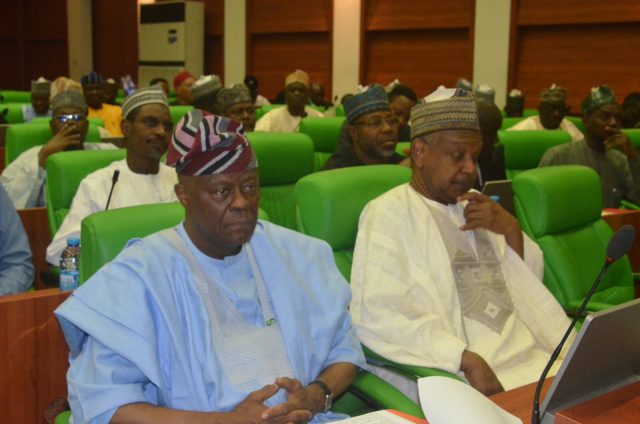
Adedeji disclosed this on Wednesday when the President’s economic team appeared before the House Committee on Appropriations to review the performance of the 2025 budget and discuss proposals for 2026.
“In the light of the tax reforms that transfer petroleum and mineral royalty and other revenues to the NRS, the total target for taxes, royalty and other minerals is ₦40.7 trillion,” Adedeji said.
“We believe that with the support of the House, we would be able to achieve what we propose.”
2025 Revenue Performance
Adedeji said the Service’s 2025 revenue target was ₦25.2 trillion, representing a ₦3.5 trillion increase over actual collections in 2024. He noted that the NRS exceeded this target, recording ₦28.23 trillion in collections.
“This is due to exceptional performance from non-oil taxes,” he said.
According to him, non-oil taxes surpassed expectations, generating ₦21.46 trillion, an increase of ₦3.4 trillion over target, while oil taxes fell short by 5.2 per cent.
“Overall, the Service exceeded its target by ₦3 trillion, which is 12 per cent above the 2025 target,” Adedeji added.
“When you compare 2025 performance to 2024, the Service collected ₦6.5 trillion more. That is an increase of 30.3 per cent, driven significantly by non-oil taxes.”
2026 Outlook
On projections for 2026, Adedeji said the NRS expects to raise ₦32.14 trillion, representing ₦3.85 trillion above actual collections in 2025.
“For the 2026 target, in the light of the oil forecast, from the ₦25.2 trillion we did last year, we forecast ₦32.14 trillion for 2026,” he said.
“The increase is forecast on oil-related revenue and non-oil due to higher production—from 1.7 million barrels per day in 2025 to 1.8 million barrels per day in 2026.”
Lawmakers Query Zero Capital Performance
Members of the committee queried the zero capital performance recorded in the 2025 budget.
Responding, the Minister of Finance and Coordinating Minister of the Economy, Wale Edun, said previous administrations relied heavily on Ways and Means financing to cover large fiscal deficits, while the NNPC PLC funded petrol subsidy through under-recovery arrangements—an approach he described as unsustainable.
He said President Bola Tinubu halted unchecked Ways and Means financing, which had risen to about ₦30 trillion, as part of efforts to restore macroeconomic stability, even though this created a funding gap.
Edun added that the issue of zero capital performance had been delegated to the Minister of State for Finance, who was invited to appear before the committee on Thursday.
Budget Implementation
The Minister of Budget and National Planning, Atiku Bagudu, explained that agreements reached with the National Assembly included moving 70 per cent of 2025 capital expenditure into 2026.
He said the ministry relies on data from the Office of the Accountant-General and the Ministry of Finance to assess budget implementation, adding that steps were being taken to ensure improved funding.
“The President has issued an executive order which we believe is consistent with the agreement reached, so that the 2026 budget coming will have better funding,” Bagudu said.
Committee’s Position
Chairman of the Committee, Abubakar Bichi, said the engagement was necessary to properly consider the 2026 Appropriation Bill.
“We decided to engage the President’s team to discuss the performance of 2025 as well as the proposed 2026 budget,” he said.
“In 2025, we achieved about ₦28 trillion in revenue from a target of ₦25 trillion. We need more information so Nigerians can understand what is going on.”