At the chapel commissioning, first lady of Nigeria, Senator Oluremi Tinubu, called on lawmakers to recognise that they remain accountable for the laws they pass
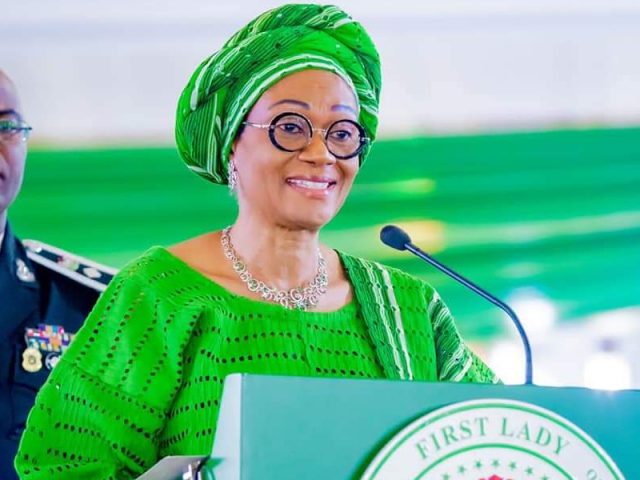
Nigeria’s First Lady, Oluremi Tinubu, has urged members of the National Assembly to remain conscious that beyond their constitutional duty to legislate for over 200 million citizens, they are ultimately accountable to God for every law they make and every decision they take.
She delivered the admonition at the dedication and commissioning of the National Assembly Chapel, constructed by the National Assembly Christian Legislators Fellowship within the legislative complex in Abuja.
The project, conceived during the sixth assembly and with its foundation laid in the eighth assembly by former Speaker Yakubu Dogara, had remained uncompleted until its final delivery under the current legislature.
Addressing lawmakers, clergy and senior government officials, the first lady described the event as both historic and personal, recalling her 12-year experience as a senator when Christian legislators held fellowship meetings in committee rooms due to the absence of a dedicated worship space.
“This occasion is quite significant for me, not only as a Christian, but as a former legislator who only had weekly fellowship in one of the committee rooms. To see this vision come to fruition gladdens my heart, and I give God all the glory,” she said.
She noted that the chapel serves as a solemn reminder that while lawmakers wield constitutional authority on behalf of the people, they ultimately answer to a higher divine authority.
Drawing from 2 Chronicles 6:39–40, she prayed that prayers offered in the chapel would shape leaders with humility, moral courage and compassion.
In his remarks, Senate President Godswill Akpabio described the commissioning as more than the unveiling of a building, calling it a spiritual milestone for Nigeria’s democracy. He stressed that governance must be guided by conscience and divine wisdom, arguing that justice predates constitutions.
“While men legislate for a season, God legislates for eternity. Unless the laws of men reflect the justice of God, they may command obedience, but they will never command reverence nor shape destiny,” he said.
Akpabio recalled how Christian lawmakers in previous assemblies worshipped in borrowed rooms and basements, sustaining the vision of a consecrated place within the legislature. He said that upon assuming office and encountering the abandoned structure, he resolved that neglect would not define the project’s fate, adding that the chapel would serve as a moral compass where lawmakers seek guidance before taking decisions affecting millions of Nigerians.
Deputy Speaker of the House of Representatives, Benjamin Kalu, said the chapel affirms that legislators do not act alone but under the sovereign authority of God. He described the Christian Legislators Fellowship as a long-standing conscience of the legislature, especially during heated debates where partisan interests threaten national good.
“This chapel is the physical expression of that accountability — a place where a senator burdened by a difficult bill may kneel in prayer and where the noise of politics gives way to the stillness of God,” he said.
Former Head of State Yakubu Gowon urged lawmakers to prioritise national unity, reminding them of the sacrifices made to preserve Nigeria’s oneness and expressing hope that the chapel would rekindle commitment to love and cohesion.
Also speaking, Dogara emphasised repentance and forgiveness as essential to national healing, noting that divine intervention is often tied to sincere moral reflection.
The exhortation was delivered by the Catholic Bishop of Sokoto, Matthew Hassan Kukah, while prayers were offered for Nigeria, the National Assembly and the Church by various Christian leaders.
The ceremony drew prominent political figures, religious leaders and top government officials, reinforcing what speakers described as the enduring intersection of faith, governance and public service in Nigeria.