
A jurisdictional disagreement has surfaced within the House of Representatives over which committee has primary oversight authority over the REA as the agency boss obeys one and snubs the other
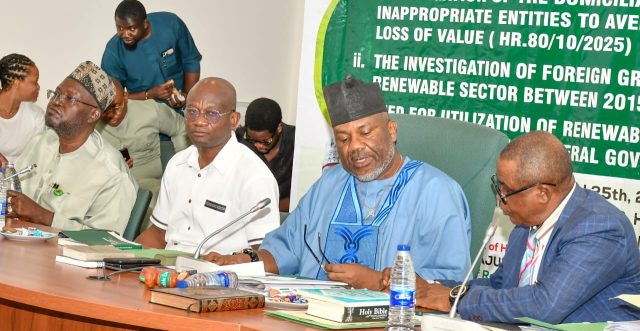
The House of Representatives Committee on Renewable Energy has issued a final summons to the Managing Director of the Rural Electrification Agency (REA), Abba Abubakar Aliyu, and the Head of the Nigeria Electrification Programme (NEP), Olufemi Akinyelure, following their repeated failure to honour invitations from the panel.
The committee is probing grants, loans and investments in Nigeria’s renewable energy sector between 2015 and 2024, with emphasis on fund disbursement, project execution and compliance with statutory and financial regulations.
Parliament Reports reported last week reported that the committee summoned heads of the concerned agencies two times to appear before it in person on Tuesday March 3, 2026, following their absence.
At the resumed investigative hearing on Tuesday, the committee’s chairman, Rep. Afam Victor Ogene, expressed frustration over what he described as persistent non-compliance by the agency’s leadership.
Ogene warned that the lawmakers would not hesitate to invoke their constitutional powers if the officials fail to appear before the committee on Thursday, March 5, 2026, at 2 p.m.
“The MD of the Rural Electrification Agency, despite his subterfuge to avoid appearing before this committee, will not get away with it lightly,” Rep. Ogene said.
“The Constitution is quite clear that this committee of the House of Representatives has the power to compel appearance. However, in the spirit of magnanimity, we are issuing a last and final invitation for them to appear on Thursday, the 5th day of March 2026, at 2 p.m. Failing which, this committee will have no other option but to issue a warrant of arrest.”
He stressed that the ongoing investigation falls within the National Assembly’s constitutional responsibility to ensure transparency and accountability in the management of public and donor funds, particularly in the renewable energy sector, which is critical to rural electrification and national economic development.
ALSO READ: REA MD risks arrests as Reps fume over snub
Meanwhile, a jurisdictional disagreement has surfaced within the House of Representatives over which committee has primary oversight authority over the REA.
In a letter dated February 27, 2026, addressed to the REA Managing Director, the Chairman of the House Committee on National Rural Electrification Agency, Rep. Muhammad Ibrahim Bukar, asserted that his panel is the duly constituted standing committee with primary oversight over the agency.
According to the letter, the committee’s mandate covers REA’s financial operations, utilisation of grants and loans, project implementation and overall institutional performance, adding that motions adopted on the House floor or general references to renewable energy agencies cannot override the express allocation of committee responsibilities.
Bukar explained that while the Committee on Renewable Energy has a broad policy-focused mandate across the sector, operational, financial and administrative matters relating specifically to the REA — including project domiciliation, grant utilisation and deployment of renewable energy projects — fall exclusively within the jurisdiction of the Rural Electrification Committee.
In the correspondence, the REA was directed to channel all legislative oversight engagements, inquiries, documentation requests and appearances strictly through the House Committee on Rural Electrification.
The agency was also cautioned against responding to or engaging in parallel correspondence with other House committees on matters already under the purview of the Rural Electrification Committee, and advised to formally refer any such communications for proper coordination and guidance.
The letter further warned that parallel investigations without formal coordination could undermine institutional order and create unnecessary friction within the legislature.
It added that the current structure of House committees, now numbering over 120 specialised panels, was deliberately designed to prevent overlaps and ensure clear lines of responsibility in legislative oversight.