
The House of Representatives Committee on Federal Polytechnics and Higher Technical Education has urged the Federal Ministry of Education to improve communication with the National Assembly to strengthen oversight of the Federal Government’s TVET programme
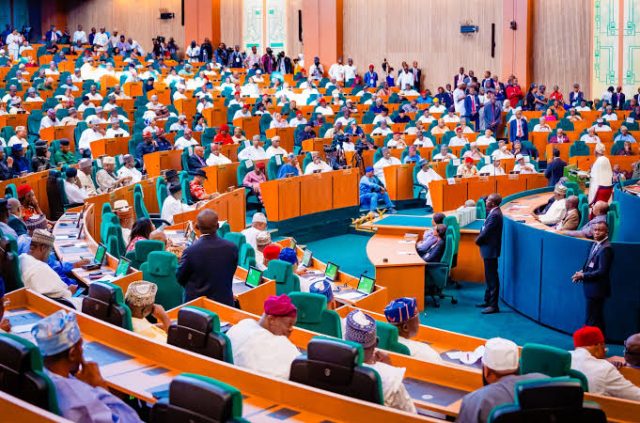
The House of Representatives Committee on Federal Polytechnics and Higher Technical Education has urged the Federal Ministry of Education to improve communication with the National Assembly to strengthen oversight of the Federal Government’s Technical and Vocational Education and Training (TVET) programme.
The committee made the appeal on Tuesday during a meeting with the Minister of Education, Dr Tunji Alausa, in Abuja, following months of unanswered letters requesting information on the implementation and progress of the skills acquisition initiative.
The meeting came after the committee summoned the minister in July and issued a final summons in August over the ministry’s failure to respond to its inquiries.
Chairman of the committee, Rep. Fuad Kayode Laguda, representing Surulere I Federal Constituency of Lagos State, said lawmakers had written six letters between January 2025 and July 2026 seeking updates on the programme without receiving any response.
Laguda recalled that the committee had invited the ministry to a meeting in July, but neither the minister nor any representative attended.
“We wrote six different correspondences on the same subject matter, requesting status reports on TVET’s activities and programmes. We did not get any response from your ministry,” he said.
However, Alausa apologised to the lawmakers, explaining that he was unaware of the correspondence sent to his ministry.
“I would have to profusely apologise and let you know that I did not get any of the correspondence that you sent,” he said.
The minister attributed the communication lapse to the transfer of a desk officer responsible for receiving correspondence from the National Assembly. He said he had directed officials to investigate the circumstances surrounding the failure to respond.
Alausa also acknowledged the legislature’s constitutional responsibility to scrutinise executive programmes and promised improved communication and cooperation with the committee.
Following a closed-door session with the minister and ministry officials, Laguda described the engagement as productive, expressing satisfaction with the explanations provided.
“Our meeting was progressive and purposeful. We are satisfied and, like I said, we will be moving forward and having better engagements,” the chairman said.
He stressed that access to adequate information was necessary for lawmakers to assess the programme’s implementation, identify operational challenges and determine whether public resources were being used effectively.
“Information is power. Having more knowledge about what is going on will aid us in carrying out our expected duties and having oversight functions,” Laguda said.
The committee chairman explained that lawmakers intended to examine the programme’s entire value chain, including its funding structure, the selection and supervision of training centres, the quality of instruction and the employment opportunities available to beneficiaries.
Speaking with journalists after the meeting, Alausa said the administration of President Bola Tinubu had revived technical and vocational education as part of efforts to tackle unemployment and address Nigeria’s shortage of skilled workers.
“Before this president came in, technical and vocational education was almost totally dissipated in our country. But I can tell you, in a short three years, we’ve brought that back,” the minister said.
According to him, more than 250,000 Nigerians are currently undergoing skills training at about 1,200 centres nationwide under the TVET programme.
He disclosed that each beneficiary receives a monthly stipend of N30,000, while participating training centres receive N50,000 monthly for every student to support practical training.
Alausa said the funding arrangement was designed to help centres employ qualified instructors, acquire modern equipment and upgrade facilities to meet current industry requirements.
He added that the ministry had reduced the number of trades covered by the programme from nearly 60 to about 22 priority areas. These include fashion design, solar photovoltaic installation, electrical installation and plumbing.
The minister said the initiative had recorded significant demand, with the first application exercise attracting about 1.3 million applicants and the second receiving nearly 1.4 million applications.
He explained that admissions had been restricted because applications exceeded the available funding and capacity of participating training centres.
Beyond skills acquisition, Alausa said the government was working to connect beneficiaries with employment opportunities and support those interested in starting their own businesses.
He disclosed that the ministry had developed a job portal through which trainees could upload their résumés and connect with employers seeking workers with relevant technical skills.
The ministry is also partnering with the Bank of Industry to assist beneficiaries who intend to establish their own businesses.
“We don’t just want them to be job seekers. We want them to be micro-entrepreneurs and do business themselves,” he said.
On access to technical education, Alausa said the Federal Government had made education free in all federal technical colleges and one selected state technical college in each state.
He explained that the government was covering tuition and other school fees under the arrangement to reduce financial barriers and encourage more young Nigerians to acquire technical skills.
The minister further disclosed that the ministry was collaborating with institutions in Singapore to improve the capacity of teachers and lecturers in technical and vocational education.
According to him, the initiative covers instructors in technical colleges and lecturers in polytechnics, with the aim of improving teaching standards, practical instruction and the quality of technical education.
Alausa said the government was pursuing a private sector-led TVET system in which businesses would play a greater role in skills development and employment, while the public sector would provide funding, regulation and an enabling environment.
The committee’s engagement with the ministry comes as the government seeks to equip Nigerians with industry-relevant skills, promote entrepreneurship, expand employment opportunities and bridge the gap between technical education and labour market demands.
The lawmakers are expected to continue engaging the ministry to obtain further details on the programme and assess its implementation and impact on beneficiaries.