
The House of Representatives has tasked its Committees on University Education, Federal Polytechnics and Higher Technical Education, and Federal Colleges of Education to investigate the extent and justification for the recent fee increases by public tertiary institutions
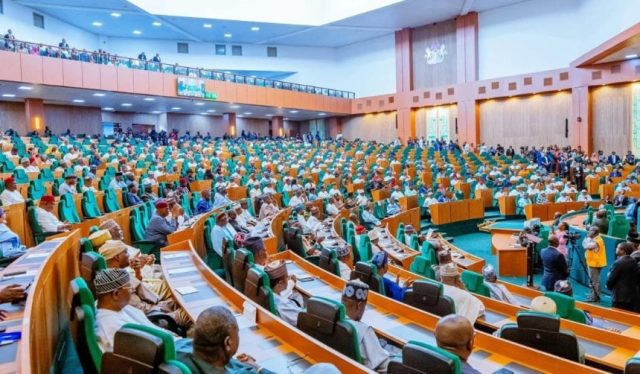
The House of Representatives on Tuesday moved to address the recent hike in school fees by public tertiary institutions across the country, warning that the development could undermine the objectives of the Nigerian Education Loan Fund (NELFUND).
The House urged the Federal Ministry of Education and the National Universities Commission (NUC) to engage the management of public tertiary institutions to suspend the fee increases and undertake a comprehensive review of their tuition structures in line with prevailing economic realities.
It also called on the Federal Government to consider increasing financial subventions to public tertiary institutions to reduce their reliance on revenue generated internally from students.
The resolutions followed the adoption of a motion sponsored by the Chairman of the House Committee on Student Loans, Scholarships and Higher Education Financing, Rep. Ifeoluwa Ehindero, during plenary.
Moving the motion, Rep. Ehindero recalled that the Federal Government established NELFUND to provide interest-free loans to indigent students, enabling them to pursue tertiary education without financial barriers.
He, however, warned that the scheme was designed around existing tuition benchmarks and institutional cost structures, noting that arbitrary or sudden increases in fees could threaten its sustainability, equity and effectiveness.
The lawmaker expressed concern over widespread increases in tuition fees and other compulsory charges by public universities, polytechnics and colleges of education, with some institutions reportedly raising fees by more than 100 per cent.
According to him, some of the increases were implemented without broad consultation or adequate consideration of the prevailing economic challenges confronting Nigerian families.
Ehindero warned that allowing the trend to continue unchecked could create significant disparities in the allocation of education loans, exclude students from less privileged backgrounds and undermine NELFUND’s objective of expanding access to higher education.
He further cautioned that the situation could trigger increased student dropouts, unrest on campuses and a loss of public confidence in the government’s commitment to making education affordable.
Following the adoption of the motion, the House mandated its Committees on University Education, Federal Polytechnics and Higher Technical Education, and Federal Colleges of Education to investigate the extent and justification for the recent fee increases by public tertiary institutions.