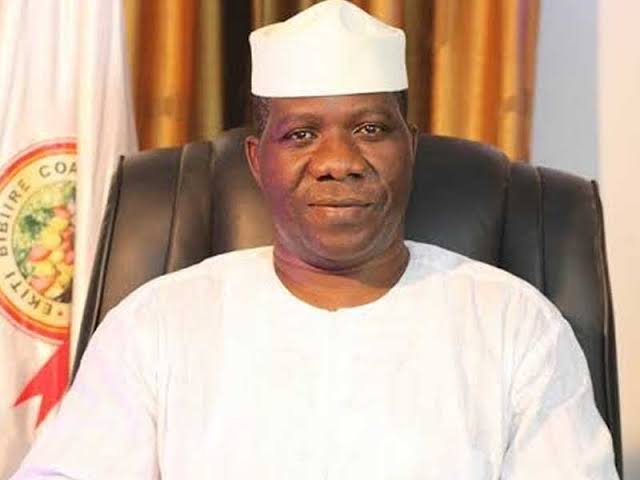
Chairman House Committee on Petroleum Resources (Upstream), Rep. Doguwa has unveiled a new policy brief a joint research publication of the Fiscal Responsibility Commission (FRC) and OrderPaper Nigeria during a legislative-stateholder engagement
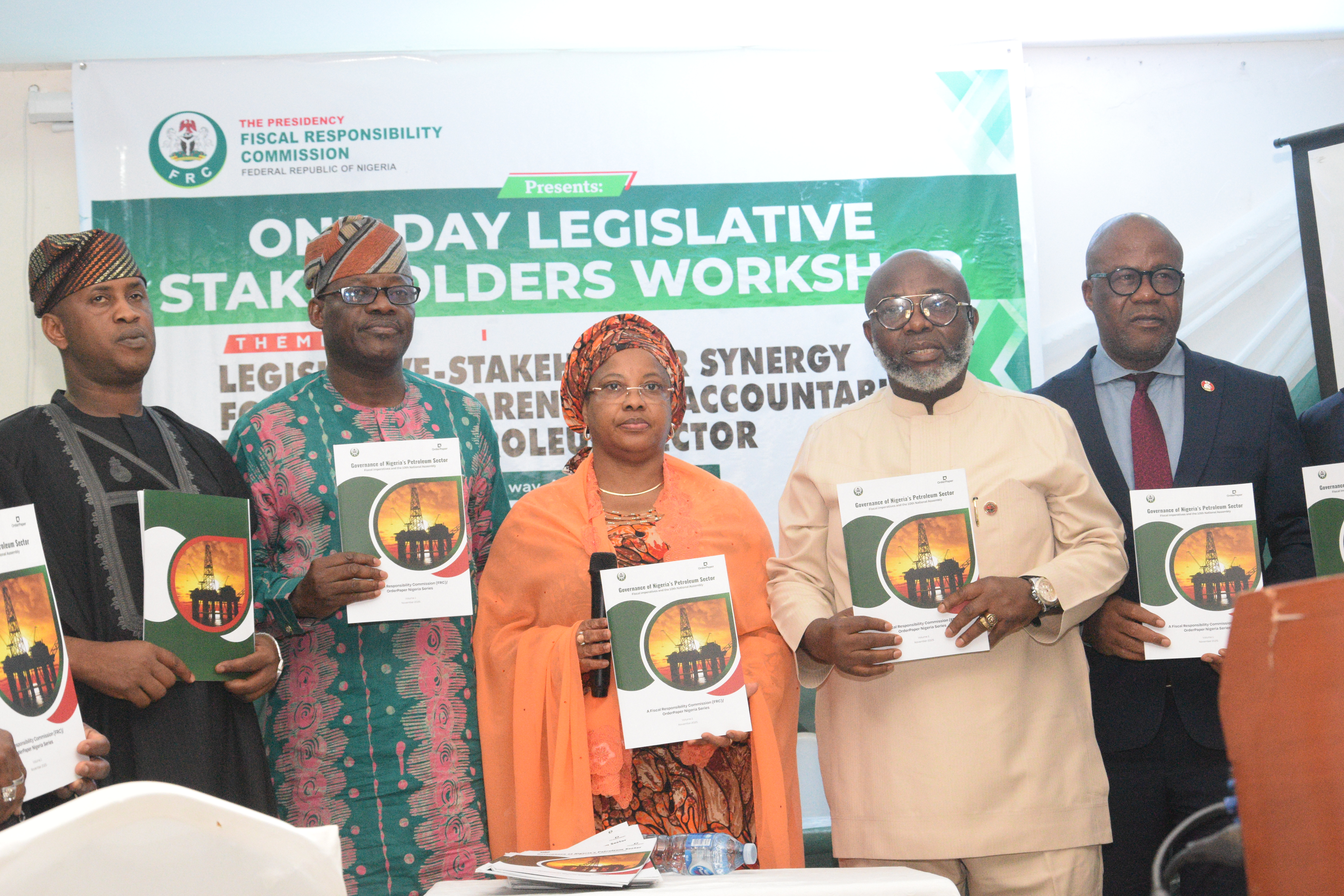
The Chairman of the House Committee on Petroleum Resources (Upstream), Rep. Alhassan Ado Doguwa, on Monday unveiled a new policy brief titled “Governance of Nigeria’s Petroleum Sector: Fiscal Imperatives and the 10th Assembly”, a joint research publication of the Fiscal Responsibility Commission (FRC) and OrderPaper Nigeria.
The document was launched in Abuja during a Legislative and Stakeholders Workshop convened by the FRC and OrderPaper.
Doguwa, who was represented by the Chairperson of the House Committee on Women Affairs, Rep. Kafilat Ogbara, said the policy brief comes at a critical time when Nigeria’s petroleum industry requires firmer fiscal discipline and improved governance structures.
The workshop, themed “Legislative and Stakeholder Synergy for a Transparent and Accountable Upstream Petroleum Sector”, brought together lawmakers, regulators, civil society organisations, and industry players to deepen conversation on transparency and reform under the Petroleum Industry Act (PIA), 2021.
In his opening remarks, Doguwa stressed the urgent need for stronger legislative–stakeholder collaboration to safeguard Nigeria’s oil revenues and improve accountability in the upstream sector.
“The upstream petroleum sector remains central to Nigeria’s economic stability,” he said. “Its revenues influence our national planning, its operations affect host communities, and its governance determines investor confidence.”
He commended the FRC for sustaining its push for openness in the industry, noting that insights from the policy document would guide ongoing reforms in fiscal discipline, revenue transparency, and accountability frameworks.
“Our sector cannot achieve its full potential without strong governance structures that close leakages, improve institutional coordination, and safeguard the nation’s economic interests,” he added.
Policy Brief Flags Fiscal Gaps Under the PIA
According to the newly launched brief, Nigeria’s petroleum sector, responsible for nearly half of government revenue and over 80 percent of export earnings, faces persistent gaps in fiscal accountability, three years after initial concerns were highlighted in a similar 2022 publication by OrderPaper.
The 2022 brief had recommended the amendment of the Fiscal Responsibility Act (FRA) 2007 and a review of ouster clauses in the PIA that restrict the Fiscal Responsibility Commission’s oversight of the petroleum sector.
The new publication notes that these concerns have “become much more apparent” despite ongoing reforms, particularly as fragmented data systems among key regulators—including the Nigerian Upstream Petroleum Regulatory Commission (NUPRC), Revenue Mobilisation Allocation and Fiscal Commission (RMAFC), and Federal Inland Revenue Service (FIRS)—continue to hinder comprehensive reconciliation of extraction, production, and remittance records.
It also highlights that the Nigerian National Petroleum Company Limited (NNPCL)’s dual commercial and fiscal roles “blur accountability lines,” further weakening fiscal transparency.
The brief observes that between June 2023 and September 2025, the 10th National Assembly entered a decisive phase of legislative oversight under the PIA, with over 20 motions already addressing crude oil theft, revenue leakages, and governance lapses.
Investigative hearings during the period uncovered $8.26 billion in unremitted revenues, underscoring the urgency to tighten accountability mechanisms.
Collaboration between the National Assembly, FRC, and the Nigeria Extractive Industries Transparency Initiative (NEITI), the document notes, is gradually shifting oversight “from reactive enquiries to data-driven accountability.”
Key Recommendations for Reform
To address current challenges, the policy brief proposes four priority interventions:
- Removal of PIA ouster clauses that impede fiscal oversight.
- Statutory quarterly remittance reporting, certified by the FRC and submitted to the National Assembly.
- Integration of fiscal data from regulators and state-owned operators into a unified platform with a public-facing transparency dashboard.
- Urgent amendment of the Fiscal Responsibility Act (FRA), 2007, to grant the FRC enforcement powers.
According to the report, implementing these reforms will increase revenue remittances, strengthen public trust, and ensure that public resources are maximally deployed for public good.
Committee Working on New Decommissioning Bill
Doguwa further revealed that the House Committee on Petroleum Resources (Upstream) is currently working on a Bill to Establish the National Commission for the Decommissioning of Oil and Gas Installations. The proposed law aims to address aging petroleum infrastructure, environmental hazards, and post-extraction restoration.
He said engagements like the workshop provide lawmakers with essential insights to guide their legislative duties in line with the PIA and other existing laws.