The spokesperson, Rep. Rotimi, disclosed that the House will soon begin voting on several constitutional amendment proposals, including bills aimed at addressing gender representation gaps
Chairman of the House of Representatives Committee on Media and Public Affairs, Akin Rotimi Jr., has disclosed that the House will soon begin debate and voting on dozens of constitutional amendment proposals, including bills aimed at addressing gender representation gaps.
Rotimi said the proposals are expected to come up as the House resumes plenary this week, with several of the amendments targeting structural barriers limiting women’s participation in politics.
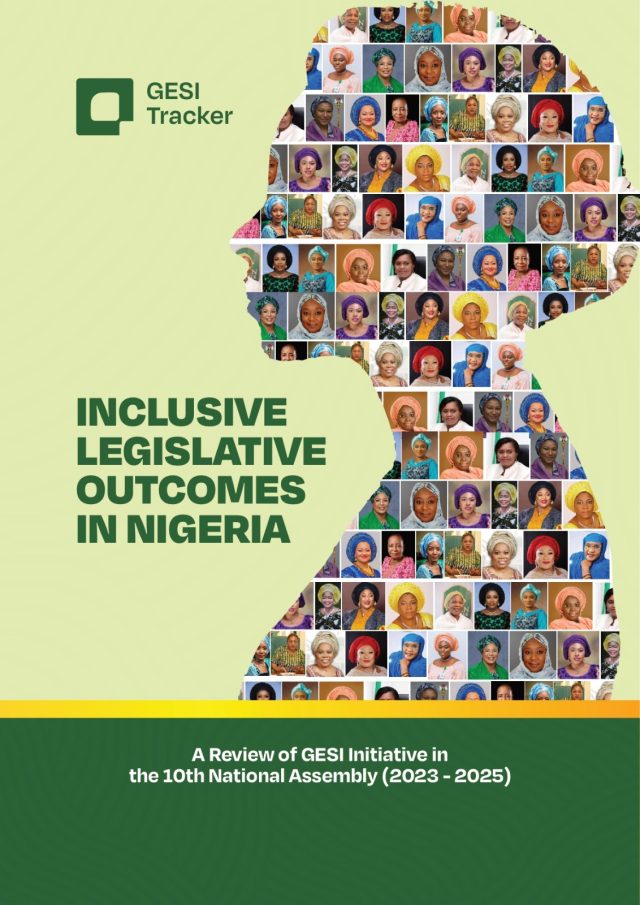
The House spokesperson made this known on Sunday during the launch of the Gender, Equity and Social Inclusion (GESI) Tracker Compendium by OrderPaper Nigeria.
The compendium, which tracked legislative activities between June 2023 and December 2025, was unveiled during a virtual public event on X to commemorate the International Women’s Day 2026.
The event, themed “Inclusive Lawmaking, Shared Prosperity,” featured Lydia Odeh of Capacity Catalyst Consulting and Rotimi as special guests, while Jokpa Mudia Erusiafe, Programme Executive at OrderPaper and curator of the compendium, moderated the discussion.
Speaking on ongoing legislative reforms, Rep. Rotimi noted that the House is currently considering several constitutional amendment bills aimed at strengthening representation and promoting inclusion.
“We have constitutional amendment bills because we have all acknowledged the very low level of representation of women in parliament that needs to be addressed,” he said.
“In the next few weeks we will be debating and voting on about 43 or 44 constitutional amendment proposals, including those that address gender issues and special seats for women.”
He explained that one of the proposals, HB 1383, seeks to create additional legislative seats specifically for women in order to improve their representation in parliament.
“At the same time, I always emphasize that even the traditional seats that can be contested by both men and women should not be ignored. Women should engage political structures and political leaders, understand where the levers are, push them and ensure that they also win those seats,” Rep. Rotimi said.
According to him, inclusion remains a key pillar of the 10th House legislative agenda, particularly under Agenda Six, which focuses on inclusion and open governance.
“Captured in Agenda Six of our legislative agenda is inclusion and open governance, and it prioritizes inclusion and equal opportunity,” he said.
Rotimi further highlighted several legislative initiatives currently being championed by lawmakers to advance gender inclusion and support underserved groups.
“I just went through the document and I saw that the top three lawmakers that have advanced GESI legislation and motions are Honourable Representatives Kafilat Ogbara, Bashiru Dawodu, and Billy Osawaru. They are phenomenal parliamentarians and gender advocates,” he said.
He added that the House continues to consider multiple bills designed to strengthen gender inclusion across public institutions.
“We have a lot of bills. For example, we have a bill seeking 15 per cent representation in the Nigeria Police Force and other paramilitary agencies like the NSCDC,” he said.
“There is hardly any plenary day we don’t have something that supports gender inclusion.”
Rotimi also outlined other proposed reforms aimed at protecting vulnerable groups and expanding rights.
“We have bills that promote women’s inclusion in governance, grant citizens’ rights to spouses of women, and mandate life imprisonment rather than the death penalty for pregnant women convicted of capital offences,” he said.
“There are also broader provisions designed to advance the cause of underserved communities, including women and persons with disabilities, such as proposals on independent candidacy.”
Providing an update on legislative progress addressing sexual harassment in educational institutions which was featured in the GESI Compendium, Rep. Rotimi revealed that the bill initially designed to address issues in higher institutions has now been expanded to cover all educational institutions and has been transmitted to the president for assent.
“When that bill passed in the House and moved to the Senate, the Senate felt that it should not just be higher institutions… it should be all educational institutions,” he said.
“So that bill has been passed in both the House and the Senate, and it has been cleaned up and transmitted to the President for assent.”
He added that the House will continue to strengthen oversight of relevant institutions to ensure compliance with the national gender policy.
“We continue to work to strengthen oversight of relevant institutions in compliance with the national gender policy,” he said.
During the event, the lawmaker also commended OrderPaper Nigeria for its role in strengthening parliamentary accountability and public engagement with the legislature.
“I must also acknowledge and celebrate OrderPaper for being a steadfast supporter of the institution. I don’t think you get enough credit for the amazing work that you do,” Rep. Rotimi said.
“I believe this is a model of parliamentary support that the world should celebrate. The work that you do should really receive a lot more support from other nonprofits, multilaterals and partners because you do a lot to support the institution.”
He added that the House will continue to strengthen oversight of relevant institutions to ensure compliance with the national gender policy.
“We continue to work to strengthen oversight of relevant institutions in compliance with the national gender policy,” he said.
OrderPaper Nigeria is Nigeria’s foremost independent parliamentary monitoring organisation and policy think tank.