The House of Representatives ad-hoc committee investigating Nigeria’s power sector reforms and expenditure from 2007 to 2024 has accused electricity DisCos for failing to meet power supply demands, saying firms failed to invest after privatisation
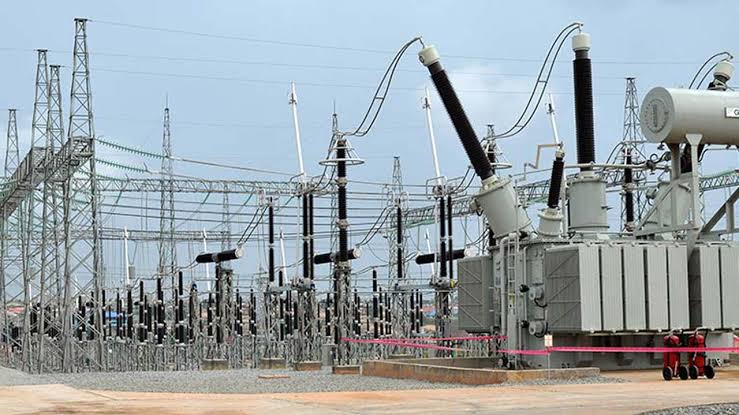
The House of Representatives ad-hoc committee investigating Nigeria’s power sector reforms and expenditure from 2007 to 2024 has accused electricity distribution companies (DisCos) of undermining the country’s power supply through years of poor investment, inadequate network expansion, and failure to meet the commitments outlined in their original business plans.
At a hearing on Wednesday, the committee chairman, Rep. Ibrahim Aliyu, said the DisCos misled the government during the privatisation process by presenting ambitious business plans but failing to commit the resources necessary to upgrade substations, transformers, and distribution networks more than a decade after taking over the assets.
Aliyu said he was alarmed that despite the Transmission Company of Nigeria’s claim that it can wheel up to 8,000 megawatts, the DisCos still uptake only about 4,000 megawatts due to their limited infrastructure, a setback he described as “self-inflicted.”
According to him, the distribution companies have “refused to invest, refused to expand, and refused franchising options,” thereby encouraging energy theft, meter bypassing, and widespread consumer dissatisfaction.
“You have caused this problem because you could not expand from what you inherited,” he said. “For 13 to 14 years now, if you had made the necessary investments, substations, up-to-date transformers, proper network expansion, there would be no issue. You would uptake more energy, the cost would be lower, and Nigerians would be happy.”
Aliyu added that many consumers resort to illegal connections because they are billed monthly for electricity that is either not supplied or severely inadequate.
“How do you expect someone whose monthly bill equals his salary to keep paying? People will look for alternatives. And your refusal to invest has contributed to this unholy attitude of bypassing and stealing energy,” he said.
The chairman noted that in some areas Nigerians enjoyed more stable supply under the defunct NEPA/NITEL-era systems, and said citizens had expected clear improvements once private investors assumed control.
He challenged the DisCos to explain the gap between their earlier claims of competence and financial capacity and their current struggle to meet tariff obligations, expand networks, and deliver reliable service.
Speaking on behalf of Kaduna Electric, Chief Regulatory and Compliance Officer, Dr. Mahmood Abubakar, attributed part of the sector’s crisis to Nigeria’s heavy reliance on electricity subsidies. He said about 60 percent of electricity supplied nationwide is subsidised, weakening investor confidence and limiting the DisCos’ ability to make needed capital investments.
Abubakar explained that only about 40 percent of electricity consumption, mostly by Band A customers, is cost-reflective. The rest depends on government subsidy that is often delayed or not paid at all.
“If we go strictly by the multi-year tariff order, about 60 percent of the energy consumed in Nigeria is subsidised by the government. Only Band A pays the reflective tariff. Even then, we have Band A feeders recording up to 80 percent energy losses due to theft and bypasses, making full recovery impossible,” he said.
He added that because DisCos cannot fully recover their revenue requirements, they are unable to secure loans or attract investment for network upgrades.
According to him, the persistent delay in subsidy payments destabilises the entire value chain, affecting generation companies’ ability to pay for gas and ultimately reducing power production.
“The subsidy is not forthcoming as and when due. It comes whenever government decides to pay. That is the reality, and it affects everyone. We cannot pay our market invoices fully, the Gencos cannot fulfil firm contracts with gas suppliers, and the whole chain is weakened,” Abubakar said.