
The Reserved Seats for Women Bill initiative is not designed to take anything away from men or reduce existing constituencies but an additional seats to be contested for by only women
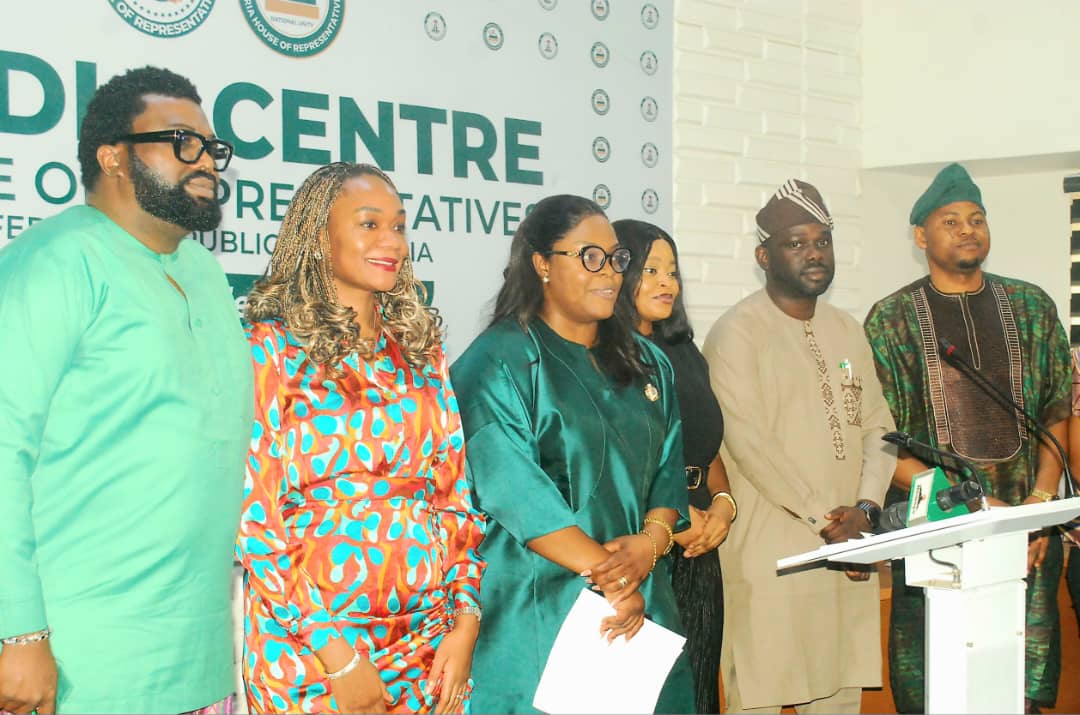
The proposed constitutional amendment seeking to create special legislative seats exclusively for women is aimed at expanding political inclusion rather than displacing existing representation. Chidozie Aja, special adviser (legislative) in the office of the deputy speaker of the House of Representatives, said this during a recent media engagement organised by the House Committee on Media and Public Affairs in collaboration with TOS Group, a civic-focused organisation supporting women, youth and vulnerable communities.
The proposed legislation, “A bill for an act to alter the provisions of the Constitution of the Federal Republic of Nigeria, 1999, to provide for seat reservation for women in the National and State Houses of Assembly and for related matters,” is one of Nigeria’s most ambitious attempts to correct the longstanding imbalance in women’s political representation.
The reserved seats for women bill forms part of the ongoing constitution review process. The constitution review bills, initially 84, have been consolidated into 44.
The bill is sponsored by the Deputy Speaker, Benjamin Kalu, and 12 other lawmakers: Rep. Tolani Shagaya, Rep. Mohammed Hassan, the late Rep. Oriyomi Onanuga, Rep. Blessing Onuh, Rep. Joshua Gana, Rep. Kama Nkemkanma, Rep. Chinwe Nnabuife, Rep. Amobi Godwin, Rep. Khadija Ibrahim, Rep. Jonathan Gbefwi, Rep. Jafaru Leko, and Rep. Francis Waive.
Speaking at the session, Aja explained that the bill proposes the creation of additional seats across Nigeria’s legislative bodies, stressing that the initiative is not designed to take anything away from men or reduce existing constituencies.
“When we speak about reserved seats, we are talking about additional seats, not a redistribution of the existing ones,” he said. “The current 109 seats in the Senate will remain intact. What the bill proposes is the creation of 37 extra seats exclusively for women—36 for the states and one for the Federal Capital Territory.”
According to him, the same formula applies to the House of Representatives, with another 37 additional seats proposed, while at the state level, three seats would be reserved for women in each State House of Assembly—one per senatorial district—amounting to 108 seats nationwide.
“These seats are women-only seats. Men cannot contest them,” Aja clarified. “Political parties will be required to field only female candidates for these positions.”
Aja noted that the measure is designed as a temporary special intervention lasting for four electoral cycles—16 years—after which it would be reviewed. He described the proposal as consistent with international democratic practices tailored to local realities.
“Every democracy is unique, but the goal is the same—deliberate inclusion,” he said, adding that the Nigerian proposal recognises the country’s political and social context.
He disclosed, however, that deliberations are ongoing, as the Senate, during committee-level considerations, proposed a scaled-down version allowing for only six additional reserved seats for women at the upper chamber, instead of the 37 originally proposed. The House report on the bill was recently laid but its consideration was stepped down at the request of lawmakers.
The bill, Aja explained, seeks to amend several sections of the 1999 Constitution, including Sections 48, 49, 71, 77, 91 and 117. He added that Section 42, which deals with freedom from discrimination, is also proposed for amendment to forestall future constitutional disputes.
“There were concerns that this might breach the non-discrimination clause,” he said. “That issue has already been anticipated, and adjustments have been built into the bill to close that gap.”
Although the idea is new in Nigeria, Aja pointed to global precedents, particularly within Africa, where variants of gender-based legislative quotas have yielded results.
“Rwanda has 61 per cent women in parliament. Tanzania, Uganda, Kenya, Senegal and Burkina Faso have all successfully adopted similar measures,” he said.
Even if the full proposal of 74 additional seats at the National Assembly level is adopted, Aja said women’s representation would only rise to about 13.6 per cent.
“That figure is still abysmally low,” he admitted. “But it is better to start somewhere than to remain stuck at the bottom.”
Beyond representation, Aja argued that the bill has far-reaching implications for governance, peacebuilding and economic growth.
“Democracy works best when all voices are heard. Right now, Nigeria is operating at half capacity because women are largely missing from decision-making tables,” he said.
Citing global studies, he noted that parliaments with stronger female participation tend to pass people-centred legislation.
“When women are involved, you see better health policies, stronger education laws, and more responsive social protection frameworks,” he said. “Women bring a human development lens that complements infrastructure priorities.”
On economic benefits, Aja referenced estimates by McKinsey Global Institute, which project that Nigeria could gain as much as $229 billion in economic value with full inclusion of women in governance and economic life.
“That represents about a 23 per cent boost to GDP,” he said. “Yet we are approaching the end of 2025 without fully tapping into this opportunity.”
He also dismissed fears that the bill would increase governance costs, saying research suggests it would add no more than one per cent to the national budget.
“If a one per cent increase can unlock hundreds of billions of dollars in economic growth, then the argument against cost does not hold,” he said.
Addressing misconceptions, Aja rejected claims that the bill undermines merit.
“Merit cannot thrive in a system designed without equity,” he said. “This bill creates the space for merit to flourish. The same electoral standards will apply.”
He concluded by calling on journalists and civic actors to actively engage the public on the bill’s significance.
“This bill is about hope, visibility and possibility,” Aja said. “We must ensure that every woman has a voice, every woman has a vote, and ultimately, every woman has a seat at the table.”