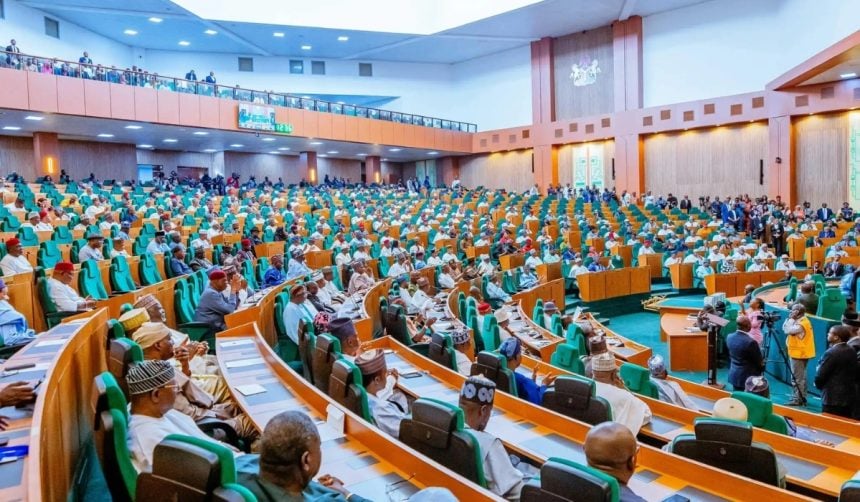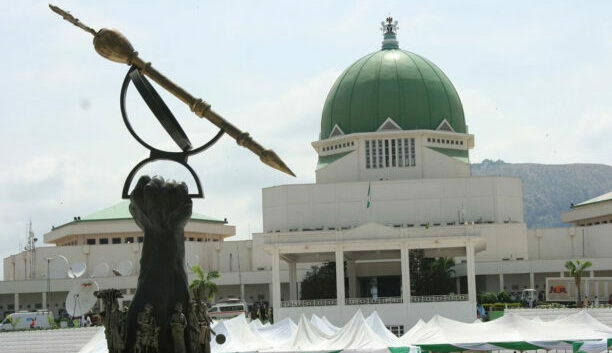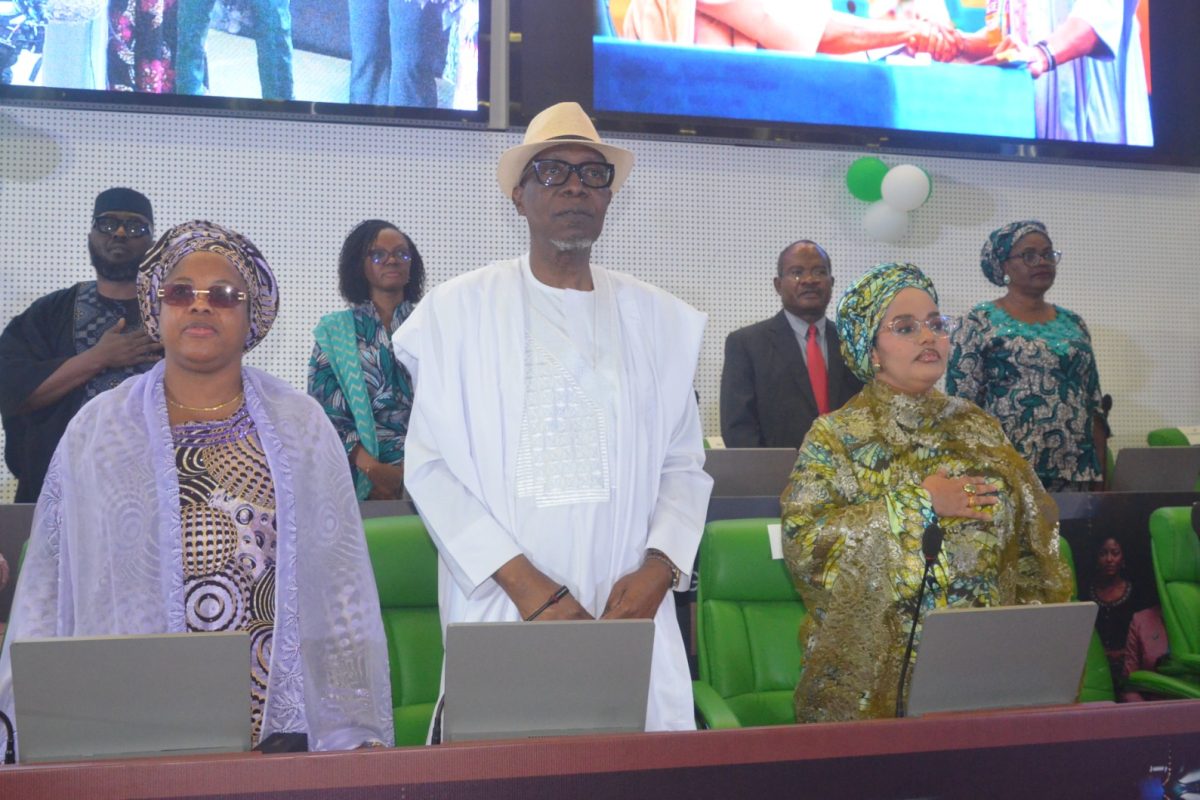

In this episode of the Gender Equality and Social Inclusion (GESI) Tracker, we will focus on the budget defence sessions at the National Assembly, noting that attention is turning from headline figures to deeper questions of priorities.

President Bola Tinubu’s proposed ₦58.47 trillion 2026 budget, presented on 19th December 2025, now enters a phase in which ministries, departments and agencies (MDAs) must justify not just what they have been allocated, but also what those allocations are meant to achieve.
For GESI, budget defence is a critical moment. It is where political commitments are tested against actual spending plans, and where inclusion can either be strengthened or quietly diluted.

A Significant Raise for the Ministry of Women Affairs
One of the most striking figures in the 2026 Appropriation Bill is the allocation to the Federal Ministry of Women Affairs. The ministry’s budget has increased from ₦78.5 billion in 2025 to ₦154.3 billion in 2026, nearly doubling year-on-year.
Of the ₦154.3 billion allocation, ₦2.66 billion is earmarked for personnel costs, ₦1.25 billion for overheads, and a substantial ₦150.39 billion for capital expenditure. On paper, this signals a strong shift toward programme delivery rather than administrative costs.
This increase raises important questions for the budget defence process. What programmes account for this surge in capital spending? How are these funds distributed across gender-based violence prevention, women’s economic empowerment, political participation, and social protection? And crucially, how will impact be measured beyond project counts and disbursement rates?
The scale of the increase creates opportunity, but it also heightens scrutiny. A larger budget brings higher expectations and less room for symbolic interventions.
Youth Development and the Scale of Demographic Pressure
The Federal Ministry of Youth Development has been allocated ₦518.36 billion in the 2026 budget proposal, reflecting the government’s recognition of Nigeria’s demographic realities. With young people forming the majority of the population, youth-focused spending is increasingly framed as both an economic and social necessity.
However, size alone does not guarantee inclusion. During budget defence, attention will need to focus on how these resources address unemployment, skills development, civic participation, and access for marginalised youth, including young women, persons with disabilities, and those in conflict-affected regions.
Without clear targeting and accountability, large youth budgets risk becoming dispersed across initiatives that are visible but uneven in impact.
Humanitarian Spending and the Limits of Poverty Alleviation
The 2026 budget proposal allocates ₦462.66 billion to the Federal Ministry of Humanitarian Affairs and Poverty Alleviation. Compared to previous years, this represents a substantial commitment and signals recognition of the scale of humanitarian need across the country.
Yet, when placed against Nigeria’s broader realities, the figure still invites scrutiny. Nigeria is widely described as the global capital of extreme poverty, with millions of citizens experiencing multidimensional deprivation. At the same time, the country is grappling with overlapping humanitarian crises, including recurrent flooding, banditry and armed violence, terrorism in the North East, drought and climate-related displacement, and worsening food insecurity.
These crises are not evenly distributed. Women, children, internally displaced persons, persons with disabilities, older persons and communities in conflict-affected and climate-vulnerable regions are disproportionately affected. For many households, humanitarian assistance and social protection are not temporary relief measures but essential mechanisms for survival and stability.
From a GESI perspective, the key issue is not only the size of the allocation, but its adequacy relative to need and its effectiveness in reaching the most vulnerable. Even at ₦462.66 billion, humanitarian spending constitutes a small fraction of the overall ₦58.47 trillion budget. This raises questions about whether poverty alleviation and human security are being treated as central development priorities or as responses to persistent emergencies.
As budget defence begins, lawmakers have an opportunity to probe how these funds will be deployed. Will allocations prioritise long-term resilience alongside emergency response? Are gender and inclusion considerations embedded in programme design and targeting? And how will impact be measured beyond disbursement figures?
The answers to these questions will determine whether increased humanitarian spending translates into meaningful inclusion or remains a stopgap in the face of deepening vulnerability.
From Allocations to Accountability
The budget defence phase is where the real work begins. Ministries must explain how their allocations translate into outcomes, timelines, and measurable impact. For GESI, this process matters as much as the headline increases.
Key questions will shape the inclusion narrative of the 2026 budget: Are gender and social inclusion objectives embedded in programme design or treated as add-ons? Are capital projects aligned with identified needs on the ground? Are monitoring frameworks strong enough to track who benefits, not just how much is spent?
Without clear answers, even expanded budgets risk reinforcing inefficiencies rather than advancing equity.
Spending as a Statement of Intent
Budgets are political documents. They reflect not only economic assumptions, but choices about whose needs matter most. As lawmakers interrogate the 2026 budget, the central GESI question is not simply how much has been allocated, but whether those allocations are designed to reduce inequality and expand participation.
The coming weeks will reveal whether inclusion remains a stated aspiration or becomes a defended priority. In a pre-election year, that distinction matters.