
Stakeholders in Nigeria’s humanitarian and migration sectors have called for stronger inter-agency coordination and deeper regional cooperation to combat the growing threat of human trafficking across Africa
Stakeholders in Nigeria’s humanitarian and migration sectors have called for stronger inter-agency coordination and deeper regional cooperation to combat the growing threat of human trafficking across Africa.
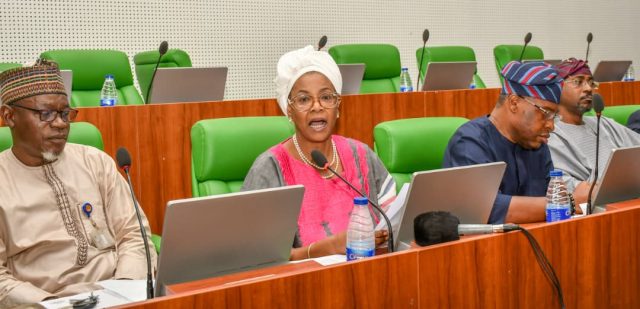
The call was made on Wednesday during a roundtable organised by the House of Representatives Committee on Humanitarian Services in Abuja. The event, themed “Strengthening Multi-Stakeholder Coordination for Sustainable Reparation, Rehabilitation and Reintegration of Vulnerable Migrants,” brought together government officials, development partners, security agencies and civil society organisations to chart sustainable solutions for preventing human trafficking and supporting survivors.
Speaking at the opening of the event, Chairman of the House Committee on Humanitarian Services, Rep. Tolulope Akande-Sadipe, described human trafficking as one of the most serious humanitarian and human rights challenges facing Nigeria and the West African sub-region.
She lamented that thousands of Nigerians, particularly women, children and young people, continue to fall victim to trafficking syndicates, exposing them to forced labour, sexual exploitation and other forms of modern slavery.
According to her, many victims endure severe abuse, deprivation and exploitation before becoming stranded in foreign countries.
“These realities remind us that trafficking is not merely a migration issue; it is a grave violation of human rights and an assault on human dignity that demands a coordinated national response,” she said.
Akande-Sadipe cited the recent evacuation of vulnerable Nigerians from South Africa and the Memorandum of Understanding between Nigeria and Ethiopia as examples of the positive outcomes that can be achieved through cross-border cooperation.
She stressed that success in combating trafficking should not end with the repatriation of victims but must also focus on prevention, rehabilitation and sustainable reintegration.
“Without comprehensive rehabilitation and meaningful reintegration, many survivors remain vulnerable to poverty, social exclusion and the risk of being trafficked again,” she warned.
The lawmaker advocated a survivor-centred, rights-based approach, noting that international best practices require repatriation processes to be safe, voluntary and dignified.
She said rehabilitation programmes should provide survivors with physical and mental healthcare, psychosocial support, legal aid, education and vocational training, while reintegration efforts should create sustainable livelihoods, facilitate family reunification where appropriate and encourage community acceptance.
Also speaking, Chairman of the Nigerians in Diaspora Commission (NiDCOM), Abike Dabiri-Erewa, said effective rescue, protection, rehabilitation and reintegration of trafficking victims could only be achieved through stronger collaboration among ECOWAS member states.
She called for closer partnerships involving West African governments, the International Organisation for Migration (IOM), the National Agency for the Prohibition of Trafficking in Persons (NAPTIP), security agencies and civil society organisations.
According to her, efforts must move beyond responding to trafficking cases to preventing them before they occur.
“We must stop them before they are trafficked. We must enforce the ECOWAS Free Movement Protocol with effective border screening to detect trafficking.
“We must establish joint task forces involving Nigeria, Niger, Mali and Burkina Faso. There should also be designated focal points in every country to facilitate early detection, reporting, early warning and rapid response,” she said.
Dabiri-Erewa also advocated sustained public awareness campaigns, speedy prosecution of traffickers and increased funding for agencies responsible for combating human trafficking.
The Director-General of NAPTIP, Binta Bello, said the increasingly sophisticated nature of trafficking networks requires more comprehensive and coordinated interventions.
She called for amendments to existing anti-trafficking laws to address emerging trends and evolving criminal tactics.
Bello also urged the Federal Government to increase budgetary allocations for repatriation, rehabilitation, reintegration and economic empowerment programmes for survivors.
She further recommended that NAPTIP be included among beneficiaries of national security funding, arguing that human trafficking has become a major national security concern.
Among her recommendations were the establishment of special intervention funds to support repatriation, vocational training, education, entrepreneurship and livelihood programmes for rescued victims.
She also advocated strengthening rehabilitation shelters and expanding access to psychological, medical and legal services for survivors.
Bello further called for stronger bilateral and multilateral agreements between Nigeria and countries including Mali, Niger Republic, Ghana, Senegal and Côte d’Ivoire to facilitate the safe and dignified return of trafficked victims.
She equally recommended intensified grassroots awareness campaigns, enhanced intelligence sharing among security agencies, improved border surveillance, more rigorous prosecution of traffickers and greater investment in skills acquisition, agriculture and micro-grant programmes to reduce the vulnerability of unemployed youths to trafficking syndicates.
Also contributing, Operations Consultant for the National Council of Child Rights Advocates of Nigeria (NACCRAN), Adefioye Golagade, proposed additional measures to curb trafficking involving Nigerian nationals across West Africa.
He said findings from investigations conducted in Mali informed NACCRAN’s recommendation for the regulation of Nigerian sex workers operating in Mali and other West African countries in line with international laws to improve monitoring and protect vulnerable persons.
Golagade also urged the Federal Ministry of Foreign Affairs to direct Nigerian embassies across West Africa to formally introduce NACCRAN to relevant authorities in host countries to strengthen collaboration on anti-trafficking initiatives.
He further recommended that the Federal Government issue official letters of authorisation to enable the organisation to participate in the rescue and repatriation of trafficked Nigerians.
According to him, stronger coordination among the Ministry of Foreign Affairs, NAPTIP, security agencies and civil society organisations is critical to tackling the menace.
He also called for the development and implementation of a comprehensive policy framework aimed at protecting Nigerian women and girls from trafficking and exploitation across West Africa.