Lawmakers engaged in heated exchanges over a motion to invite President Tinubu to explain non-release of funds for capital projects
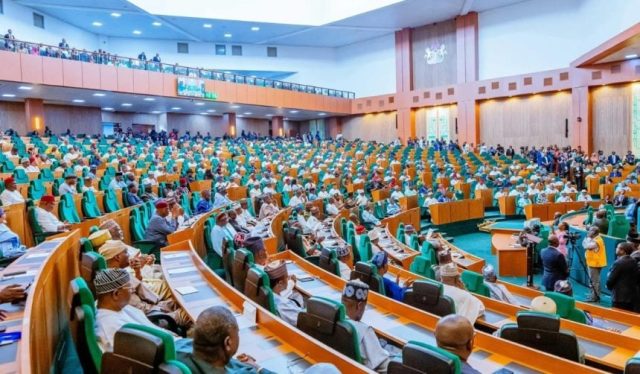
The House of Representatives descended into a rowdy session on Wednesday as lawmakers engaged in heated exchanges over a motion seeking to invite President Bola Tinubu to appear before the green chamber to explain the delay in releasing funds for capital projects, unpaid contractors and constituency interventions.
The motion, sponsored by Rep. Alex Mascot Ikwechegh (LP, Abia), also sought explanations over the alleged poor funding of the capital components of the 2024, 2025 and 2026 budgets, despite legislative approvals and presidential directives aimed at settling verified contractor liabilities.
Presenting the motion, Rep. Ikwechegh argued that although the National Assembly had fulfilled its constitutional responsibility by passing appropriation laws, the credibility of the budgeting process depended on the timely release and utilisation of approved funds.
He recalled that during the 2026 budget defence sessions, several ministers and heads of ministries, departments and agencies (MDAs) disclosed that many capital projects under the 2025 budget received either no funding or only negligible releases.
According to him, the funding gaps have left many contractors, who borrowed from financial institutions to execute government projects, unable to recover their costs, resulting in mounting debts and growing protests.
The lawmaker noted that President Tinubu had, at a Federal Executive Council (FEC) meeting on December 10, 2025, expressed displeasure over the backlog of unpaid contractor obligations and directed the immediate settlement of about N1.5 trillion in verified liabilities.
He said the president also constituted an inter-ministerial committee to harmonise records and indicated the government’s willingness to borrow funds where necessary to clear verified debts.
Ikwechegh, however, expressed concern that despite the presidential directive, approvals by the National Assembly and assurances by the Minister of Finance, contractors were yet to receive payments.
He further cited a treasury circular dated June 29, 2026, issued by the Office of the Accountant-General of the Federation, which reportedly suspended payments for constituency and zonal intervention projects pending fresh verification by the Federal Ministry of Special Duties and Intergovernmental Affairs.
According to him, the directive has introduced another layer of bureaucracy capable of frustrating already approved and executed projects.
The lawmaker therefore urged the House to commend President Tinubu for directing the settlement of contractor liabilities while calling for the speedy implementation of the directive.
He also proposed that the president be invited to address lawmakers on the delays in funding projects and broader concerns over capital releases.
“We want to use this opportunity to invite the President of the Federal Republic of Nigeria to this chamber to explain to Nigerians and to Parliament why projects captured in the 2024, 2025 and 2026 budgets are yet to be fully implemented,” Rep. Ikwechegh said.
He further linked the funding delays to broader governance concerns, arguing that inadequate releases were affecting infrastructure delivery and security funding.
Supposing the motion, Rep. Amobi Godwin-Ogah, proposed an amendment that the House suspend plenary for one week until the funding issues were resolved.
However, the debate took a dramatic turn when Rep. Yusuf Gagdi (APC, Plateau) strongly opposed the proposal to invite the president.
Gagdi argued that the responsibility for implementing constituency projects rests with the relevant ministries, departments and agencies rather than the president.
He maintained that summoning the president over matters of project implementation was unnecessary, insisting that the House should instead hold the appropriate MDAs heads accountable.
His position drew sharp reactions from other lawmakers, leading to shouting matches and disorder on the floor.
As tensions escalated, Speaker Tajudeen Abbas intervened and called for order.
He subsequently ruled that the prayer seeking to invite President Tinubu was out of order, explaining that it was not contained in the original motion presented to him by Rep. Ikwechegh.
The speaker thereafter directed the House to vote on the remaining prayers of the motion, among which directed that an ad-hoc committee be set up to interface with relevant fiscal authorities on the state of releases and the settlement of contractor liabilities and the utilisation of approved borrowing and report back to the House within four weeks and referred back for further legislative actions, bringing an end to the tense debate.