A bill seeking additional tax on oil companies to fund the South South Development Commission (SSDC) has been opposed by the Government
The House of Representatives on Wednesday commenced consideration of a bill seeking to expand the funding sources of the South-South Development Commission (SSDC), with the Federal Government opposing a proposal to impose a new statutory levy on oil and gas companies.
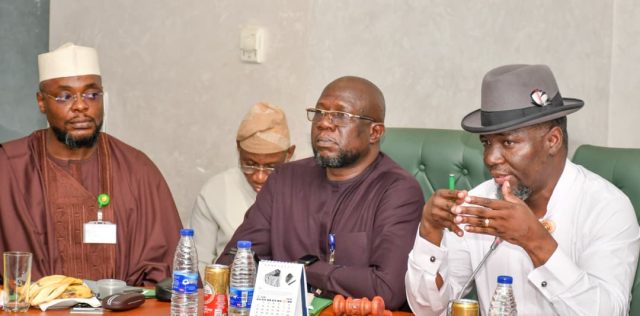
The disagreement emerged during a public hearing organised by the House Committee on the South-South Development Commission, where lawmakers, government officials, industry stakeholders and development partners examined a bill to amend the South-South Development Commission (Establishment) Act, 2025.
The proposed amendment seeks to strengthen the Commission’s finances by introducing additional statutory revenue streams, including allocations from the Value Added Tax (VAT), the Ecological Fund, and mandatory contributions from extractive industries and agricultural processing companies operating in the South-South.
Declaring the hearing open, Speaker of the House of Representatives, Tajudeen Abbas, said the amendment was aimed at placing the SSDC on the same financial footing as other regional development commissions established by the National Assembly.
Represented by the House Leader, Julius Ihonvbere, Abbas said the legislation would provide the Commission with a more stable and sustainable funding framework to enable it effectively deliver its developmental mandate.
“The bill before us seeks to strengthen the financial framework of the South-South Development Commission by introducing additional statutory sources of funding to support the Commission in the effective discharge of its mandate,” he said.
The Speaker noted that despite the South-South’s immense contribution to Nigeria’s economy through oil and gas production, the region continues to contend with environmental degradation, infrastructure deficits, ecological challenges, youth unemployment and widespread socio-economic hardship.
“The region has, for decades, remained the backbone of Nigeria’s oil and gas industry, contributing immensely to national revenue and economic growth. Yet, it continues to grapple with significant environmental degradation, infrastructure deficits, ecological challenges, youth unemployment and other socio-economic concerns that demand coordinated and sustained intervention,” Abbas added.
While backing efforts to strengthen the Commission, the Speaker cautioned that any proposal introducing new statutory financial obligations must undergo thorough legislative scrutiny to ensure it remains equitable, fiscally responsible, transparent and in the national interest.
Chairman of the House Committee on the South-South Development Commission, Rep. Julius Pondi, said the amendment was intended to provide the intervention agency with a stronger and more predictable revenue base for critical development projects across the region.
According to him, the bill proposes additional funding through contributions from extractive industries, agricultural processing firms, allocations from the Ecological Fund and a dedicated share of VAT revenue.
Pondi assured stakeholders that lawmakers had approached the hearing without any preconceived position.
“This public hearing is not intended to endorse predetermined conclusions. Rather, it is designed to provide an open, objective and constructive forum for dialogue where every stakeholder can contribute to improving the bill,” he said.
However, the hearing exposed divergent views after the Minister of State for Regional Development, Uba Maigari Ahmadu, urged lawmakers to remove the proposed three per cent statutory contribution from oil and gas companies, warning that the additional levy could discourage investment in the petroleum sector.
Ahmadu argued that the Federal Government had only recently succeeded in restoring investor confidence after more than a decade of declining investments.
“Before this administration came on board, there was virtually no investment in the oil and gas sector for over ten years. Today, we have investments worth over 50 billion dollars coming into the sector because confidence has been restored,” he said.
The minister maintained that Nigeria’s petroleum industry was already burdened with multiple taxes and statutory charges.
“One of the reasons why investment dried up was the sheer number of taxes, levies and statutory charges imposed on the sector. We have about 270 different taxes and levies. There is hardly any country in the world with such a level of taxation,” he said.
He appealed to lawmakers to delete the proposed levy from the bill.
“Capital is blind. Investors will always move to jurisdictions where the business environment is more competitive. My appeal is that the proposed three per cent contribution from oil and gas companies should be deleted from the bill,” Ahmadu said.
The minister noted that petroleum operators already contribute three per cent of their operating expenditure to the Niger Delta Development Commission (NDDC), in addition to another three per cent allocated to Host Community Development Trusts under the Petroleum Industry Act (PIA).
According to him, introducing another mandatory contribution would increase operating costs and weaken Nigeria’s competitiveness in attracting global investment.
“If we continue imposing new statutory charges on the sector to fund every intervention agency, we risk reversing the gains already recorded. That approach will ultimately become counterproductive,” he added.
Responding, Chairman of the South-South Development Commission, Chibudom Nwuche, assured lawmakers that the Commission would operate with transparency, accountability and financial discipline.
He urged the National Assembly to subject the Commission to periodic audits to ensure prudent utilisation of public funds.
“Let me assure the minister and members of this House that this Commission will be accountable. We shall be transparent. Whatever is given to us should be subjected to regular audits so that every kobo can be accounted for in the development of the South-South region,” Nwuche said.
He also urged lawmakers not to judge the SSDC by the perceived shortcomings of previous intervention agencies, stressing that the Commission’s legal framework clearly separates the responsibilities of its governing board and management to guarantee accountability.
Nwuche further challenged the minister’s claim that the oil and gas industry was subjected to more than 270 taxes and levies.
“I would like the minister to enumerate these taxes because 270 is a very large number. While I appreciate the need for Nigeria to remain globally competitive, it is important that the debate is driven by verifiable facts,” he said.
He insisted that the Commission was only seeking parity with other regional development commissions.
“What we are asking for is not too much. We are the newest regional development commission established by this National Assembly, and we believe certain funding provisions were inadvertently omitted from the original law. We are simply asking to be placed on the same financial footing as the other regional development commissions,” Nwuche said.
Established in 2025, the South-South Development Commission is mandated to coordinate development interventions across the six states of the South-South geopolitical zone. If passed, the amendment bill will expand the Commission’s statutory funding sources and align its financing structure with those of similar regional development commissions.
The hearing highlighted the challenge before lawmakers of balancing the need for sustainable funding for regional development agencies with preserving an investment-friendly environment for Nigeria’s strategic oil and gas sector.