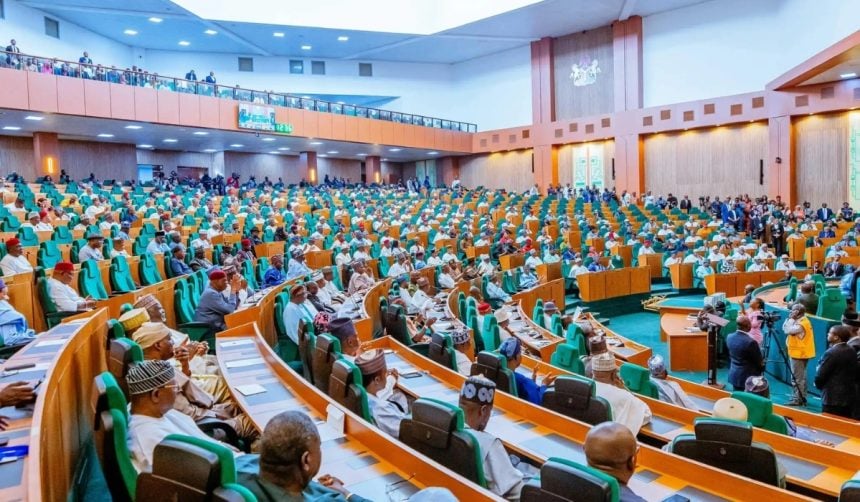
Speaker of the House of Representatives, Abbas Tajudeen, has assured Nigerians that the proposed constitutional amendment to establish state police contains robust safeguards to prevent governors or political actors from using the security outfit as a tool for political intimidation
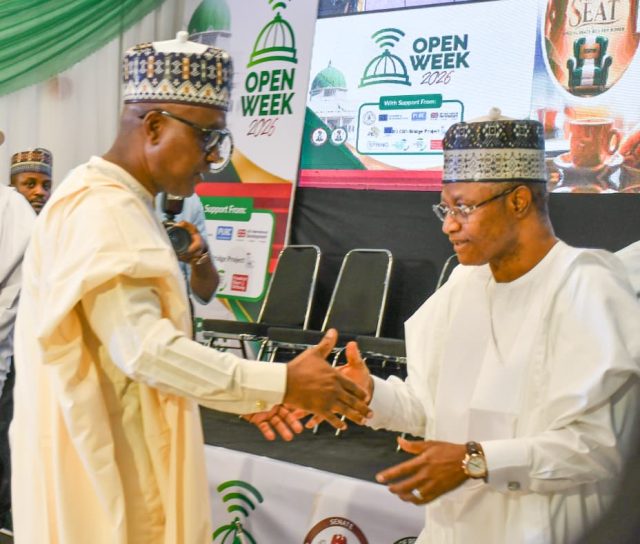
Speaker of the House of Representatives, Abbas Tajudeen, has assured Nigerians that the proposed constitutional amendment to establish state police contains robust safeguards to prevent governors or political actors from using the security outfit as a tool for political intimidation.
Speaking on Wednesday at the National Security Roundtable held during the 2026 National Assembly Open Week at the National Assembly Library Trust Fund in Abuja, Abbas said concerns that state police could become “private armies” in the hands of state governors were legitimate but had been carefully addressed in the executive bill currently before the National Assembly.
“I understand the concern that many people bring to this discussion, and it is a reasonable one. It is the fear that a State Police could become the private army of a governor or a political godfather,” the speaker said.
“The people who drafted this bill had the same fear, and they answered it.”
According to Abbas, the proposed law provides a transparent appointment process for state commissioners of police, requiring nominations through the National Police Council and confirmation by the State House of Assembly, rather than leaving the decision solely to governors.
He explained that removal of a commissioner would also require the support of two-thirds of members of the state assembly and could only be carried out for valid reasons.
The speaker further disclosed that the constitution would empower the federal police to intervene where a state police service becomes dysfunctional or is used unlawfully, but only under clearly defined conditions.
“If a State Police breaks down, or falls into the wrong hands, or turns against the very people it should protect, the Constitution allows the Federal Police to step in. But it allows this only in defined situations, only in writing, only for a limited period, with notice to the Governor and to the National Assembly within forty-eight hours, and always subject to the courts.
“No such step may dissolve a State Police or suspend a State’s elected institutions. These are the safeguards that will keep the reform honest,” he said.
Abbas described the roundtable as an opportunity to deliberate on one of the country’s most consequential constitutional reforms, noting that President Bola Tinubu had become the first Nigerian leader to formally transmit an executive bill seeking the establishment of state police.
“For the first time in our history, a sitting President has made State Police a central part of national reform. He has done so not with words alone, but with a bill that now sits before the House of Representatives,” he said.
Commending Tinubu for taking what he described as a bold step, the speaker said successive administrations had debated state policing for decades without initiating constitutional changes.
“President Bola Ahmed Tinubu has done what many leaders talked about for thirty years, but few dared to attempt. He has sent this Parliament an executive bill to amend the Constitution and to allow for State Police Services,” Abbas stated.
He also paid tribute to members of the Armed Forces, the Nigeria Police and other security agencies for their sacrifices in protecting the country.
Current Policing Structure Overstretched
Abbas argued that Nigeria’s existing centrally controlled policing system was no longer adequate to tackle increasingly complex security challenges across the federation.
He cited banditry, kidnapping, attacks on schools and persistent farmer-herder clashes as examples of security threats that require locally driven responses.
“A country as large and as varied as ours cannot be policed forever by one central Force run from the capital,” he said.
“Banditry has threatened families and farmers. Kidnappers have plagued our highways. Disputes between farmers and herders have resulted in deadly clashes. Fear has overtaken our schools.
“These are local problems, and they need local knowledge, local presence, and local accountability.”
The speaker clarified that the executive bill seeks to rename the Nigeria Police Force as the Federal Police Service while allowing individual states to establish their own police services if they meet constitutional requirements.
Under the proposal, state police would only become operational after enabling laws are passed by state assemblies and after meeting national minimum standards to be set by the National Assembly.
The Federal Police would retain responsibility for terrorism, border security, federal offences and policing the Federal Capital Territory, while state police would handle routine law enforcement within their respective states.
Abbas added that each state police service would operate under an independent State Police Service Commission with direct funding arrangements and strict legal restrictions on the use of force.
“The bill places strict limits on the use of firearms. And it forbids any officer from arresting, detaining, or using force for political, ethnic, religious, or personal reasons,” he said.
Drawing lessons from countries such as Germany, Canada, India and the United States, Abbas said effective local policing depends on national standards, information sharing and strong accountability mechanisms.
Implementation Must Be Gradual
The speaker proposed a phased implementation strategy to ensure the reform succeeds.
According to him, the National Minimum Standards Act should be enacted before any state police begins operation, while states should be admitted gradually rather than establishing 36 police services simultaneously.
He also stressed the need for sustainable financing to prevent states from creating police forces they cannot maintain.
“Standards first, structures after,” Abbas said.
He called for broader security reforms beyond the establishment of state police, including legislation on a national biometric and criminal database, improved intelligence sharing, safer schools, enhanced border security and better welfare for security personnel.
Stakeholders Advocate Broader Reforms
House Leader, Rep. Julius Ihonvbere, urged lawmakers to formally integrate traditional rulers and community-based organisations into Nigeria’s security framework, arguing that grassroots institutions possess critical intelligence about criminal activities in their communities.
Former Chief of Defence Staff, Gen. Lucky Irabor (retd.), who chaired the event, called for a comprehensive overhaul of Nigeria’s security architecture through intelligence-led policing, stronger institutional collaboration and responsible deployment of emerging technologies.
“We must evolve to make intelligence our first line of defense. Intelligence sharing, data integration, and institutional trust must replace isolated operational efforts,” Irabor said.
He added that technologies such as artificial intelligence, drones, biometrics and predictive analytics had become strategic necessities but should complement rather than replace human judgment.
Kaduna State Governor, Uba Sani, also advocated intelligence-driven policing, stronger inter-agency cooperation and greater use of technology, including forensic science, biometric identification and digital evidence management.
He said criminal networks increasingly operate across state boundaries, making coordinated intelligence sharing and joint operations essential for effective security.
Traditional rulers also backed the proposal.
The Etsu Nupe and Chairman of the Niger State Council of Traditional Rulers, Brig.-Gen. Yahaya Abubakar (retd.), endorsed state police, describing it as a vital step toward strengthening grassroots security and community policing.
Executive Secretary of the National Assembly Library Trust Fund, Hon. Henry Nwawuba, stressed the importance of research and evidence-based policymaking in shaping security reforms, while Secretary-General of the Conference of Speakers and Presidents of African Legislatures (CoSPAL), Ambassador Dapo Oyewole, called for stronger collaboration among legislatures, governments and security agencies to tackle emerging security threats.
Also speaking, Head of Development Cooperation at the UK’s Foreign, Commonwealth and Development Office, Ms. Cynthia Rowe, described the roundtable as a significant national conversation and welcomed the broad participation of government institutions, traditional leaders, security agencies and civil society groups.
She said the inclusion of civil society before the passage of the state police bill demonstrated Nigeria’s commitment to inclusive lawmaking and noted that the United Kingdom remained committed to supporting Nigeria’s efforts to strengthen security, democratic governance and institutional reforms.