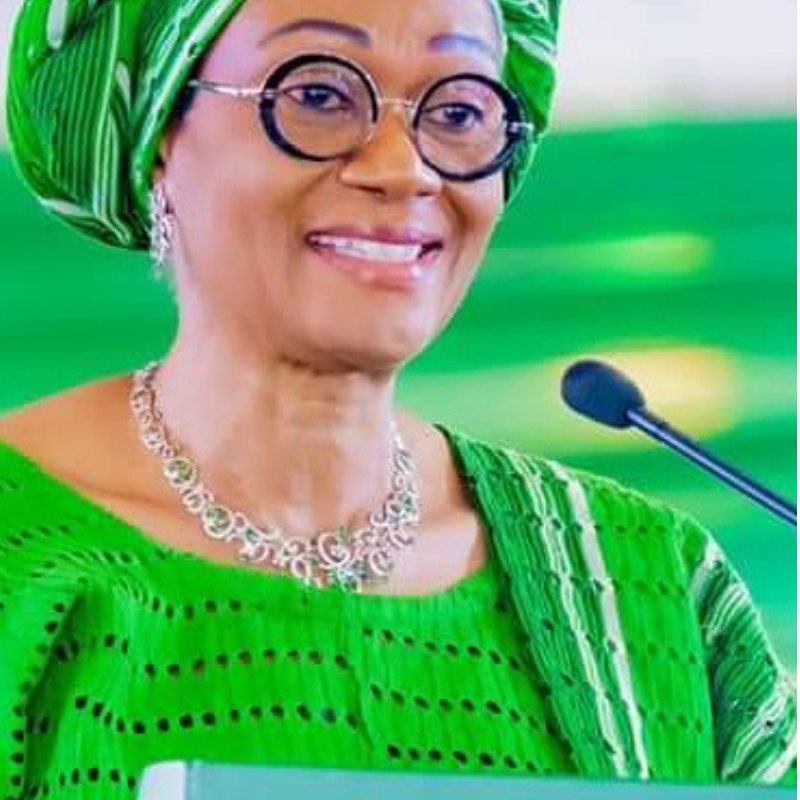
Minister of Industry, Trade and Investment, Dr. Jumoke Oduwole, said Nigeria’s industrialisation drive and participation in the African Continental Free Trade Area (AfCFTA) must deliberately harness the economic strength of women.
As part of the 2026 International Women’s Day celebration, Nigeria has reaffirmed its commitment to strengthening its leadership in intra-African trade by unlocking the productive potential of women-led enterprises and expanding their access to finance, markets and business opportunities.
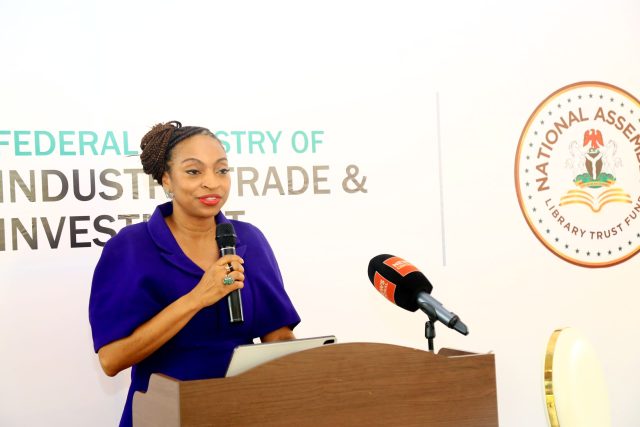
This commitment was highlighted by ministers and other stakeholders during the Colloquium in Honour of Women’s Role in Industry, Trade and Investment, themed “Positioning Nigeria to Lead Intra-African Trade,” held on Friday at the National Assembly Library Complex in Abuja.
Delivering the keynote address, the Minister of Industry, Trade and Investment, Dr. Jumoke Oduwole, said Nigeria’s industrialisation drive and participation in the African Continental Free Trade Area (AfCFTA) must deliberately harness the economic strength of women.
She noted that AfCFTA has moved beyond aspiration to reality, creating one of the largest integrated markets in the world.
“The African Continental Free Trade Area is no longer a conceptual aspiration. It is operational architecture: a $3.4 trillion market of 1.4 billion people, representing the largest free trade area in the world by a number of participating countries. But let us be clear: markets do not create prosperity. Production does. Trade agreements do not industrialise nations. Competitive enterprises do,” she said.
According to her, Nigeria’s ambition under AfCFTA is not to serve as a passive consumer market but to emerge as a major production hub on the continent.
“Nigeria’s ambition under AfCFTA is not to be a passive consumer market. It is to become a production hub — manufacturing, processing, innovating and exporting at scale,” she said.
Oduwole explained that while manufacturing currently contributes about 13–14 percent to Nigeria’s Gross Domestic Product (GDP), industrialised economies typically record 20–25 percent, noting that closing the gap is central to the country’s new industrial policy.
Highlighting the economic role of women-led businesses, the minister said women dominate several sectors of Nigeria’s real economy.
“Across retail, textiles and garments, agribusiness processing, nutrition systems, and light manufacturing, women-led MSMEs are deeply embedded in value chains. There are over eight million women-led MSMEs in Nigeria generating more than $15 billion in annual revenue.
“They account for over 40 percent of MSME employment, yet receive less than 20 percent of formal MSME financing. Over 90 percent operate informally and fewer than 15 percent have access to structured digital training,” she added.
She also lamented that fewer than five percent of women-owned enterprises operate with formal governance structures, a gap that limits their ability to scale and attract investment.
“This is not a capability problem. It is a structural design problem. We have mentorship without capital, finance without readiness, and markets without compliance support,” she said.
The minister assured that the Ministry of Industry, Trade and Investment, working with the Bank of Industry and private-sector partners, is committed to moving beyond dialogue to structured implementation that will strengthen women-led businesses.
“Investment readiness is the missing bridge between enterprise survival and enterprise scale — and scale is what AfCFTA demands,” she added.
Also speaking, the Minister of State for Industry, Trade and Investment, John Enoh, emphasised that AfCFTA represents a historic opportunity for Nigeria to deepen industrial production and expand exports across the continent.
“The African Continental Free Trade Area is no longer a conceptual aspiration. It is operational architecture with a $3.4 trillion market of 1.4 billion people, representing the largest free trade area in the world by number of participating countries,” he said.
However, he stressed that prosperity would be driven by production rather than market size alone.
“Production, rather than markets, creates prosperity. Trade agreements do not industrialise nations; competitive enterprises do,” he said.
According to him, Nigeria’s ambition under AfCFTA is to transform into a major production hub capable of manufacturing, processing and exporting goods at scale.
Enoh noted that manufacturing contributes about 13–14 percent to Nigeria’s GDP, compared with 20–25 percent in industrialised economies.
“The gap is not merely statistical. It represents unrealised factories, unrealised exports and unrealised jobs. Closing that gap is the mandate of our new Nigeria Industrial Policy,” he said.
He described women as the real engine of economic growth and stressed that empowering women-led enterprises would be critical to Nigeria’s competitiveness under AfCFTA.
“As we speak about industrialisation and intra-African trade, we must confront a powerful truth that women already dominate large segments of Nigeria’s real economy,” he said.
“They account for over 40 percent of MSME employment, yet receive less than 20 percent of formal MSME financing. Over 90 percent operate informally. Fewer than 15 percent access structured digital training, and less than five percent have formal governance systems.
“This is not a capability problem; it is a structural design problem,” he said.
According to him, if Nigeria is to lead under AfCFTA, it must address these structural barriers and unlock the productive capacity of women-led enterprises.
“We have mentorship without capital, finance without readiness and markets without compliance support. If Nigeria is to lead AfCFTA, we must unlock the productive potential of women-led enterprises at scale.
“This is not a social justice conversation. It is an industrial competitiveness conversation,” he said.
The Minister of Women Affairs, Iman Suleiman-Ibrahim, also described AfCFTA as one of the most ambitious trade liberalisation efforts in modern history.
She said the agreement represents a 1.4 billion-person market with a combined GDP exceeding $3 trillion, adding that economists project intra-African trade could rise to 35 percent of Africa’s total trade by 2040, up from about 16 percent today.
According to her, Nigeria’s leadership role in the continental market will depend on how effectively it integrates women into economic production and trade systems.
“However, Nigeria cannot truly lead intra-African trade if half of its economic engine remains under-utilised,” she said.
Suleiman-Ibrahim emphasised that women remain central to Nigeria’s economic life, particularly in agriculture and small-scale enterprises.
“Women account for approximately 70 percent of Nigeria’s agricultural labour force, yet they own less than 14 percent of agricultural land, access less than 10 percent of formal agricultural credit, and constitute only a fraction of those registered in formal agricultural export schemes.
“They do the work. They bear the risk. But the system was not designed to reward them,” she said.
Citing international research, she noted that women-led businesses tend to reinvest significantly in community development.
“According to the International Trade Centre, women-led SMEs are 70 percent more likely to reinvest revenue into their communities, their children’s education, and local supply chains than their male counterparts.
“The World Bank estimates that closing the gender gap in economic participation could add 26 percent to global GDP, with developing economies like Nigeria capturing a disproportionately large share of that gain,” she said.
In her goodwill message, the Head of the Civil Service of the Federation, Mrs. Didi Esther Walson-Jack, commended the Ministry of Industry, Trade and Investment for creating a strategic platform that recognises the transformative contributions of women to economic development and regional integration.
She noted that women across Africa continue to drive entrepreneurship, innovation and enterprise development.
According to her, Nigeria’s ability to lead intra-African trade will depend not only on policy frameworks and trade facilitation mechanisms but also on the empowerment of capable and visionary actors within the economy.
“Women constitute a significant proportion of Nigeria’s productive and entrepreneurial base, and expanding their opportunities within value chains, manufacturing, commerce and cross-border trade will significantly enhance national competitiveness,” she said.
Walson-Jack added that the Federal Civil Service remains committed to supporting government reforms aimed at promoting inclusive economic growth, strengthening institutional coordination and creating an enabling environment for businesses and investors.
Earlier in his opening remarks, the Permanent Secretary of the Ministry of Industry, Trade and Investment, Amb. Nura Abba Rimi, noted that Africa has adopted several forward-looking frameworks under AfCFTA, including the Protocol on Digital Trade and the Protocol on Women and Youth in Trade.
He explained that the protocol aims to strengthen the participation of women and young entrepreneurs in African trade by expanding access to markets, improving financing opportunities and supporting the growth of women-owned businesses.
According to him, the Memorandum of Understanding (MoU) signed during the colloquium is designed to ensure that the opportunities created by AfCFTA translate into tangible and inclusive economic growth across the continent.