
The House of Representatives has given its green light to the creation of the State Police, awaiting the Senate’s concurrence and the approval of at least two-thirds of the State Houses of Assembly before receiving presidential assent to become law
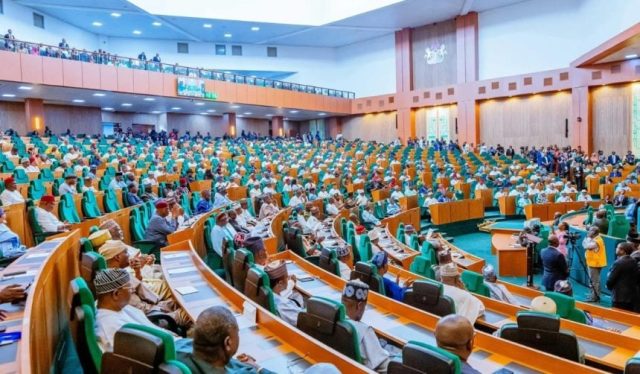
The House of Representatives on Thursday passed a landmark constitutional amendment bill seeking to establish state police across Nigeria, marking a major milestone in the country’s long-running debate over decentralising policing and strengthening internal security.
The proposed legislation, titled “A Bill for an Act to Alter the Constitution of the Federal Republic of Nigeria, 1999 to Provide for the Establishment of State Police and for Related Matters (Sixth Alteration) Bill, 2026,” secured overwhelming support during consideration by the Committee of the Whole, chaired by Speaker of the House, Rt. Hon. Tajudeen Abbas.
Ahead of the vote, the House confirmed the presence of 290 lawmakers, meeting the constitutional requirement for a two-thirds quorum of the 360-member chamber.
The manual voting exercise saw 289 lawmakers vote in favour of the bill, while one member voted against it. There were no abstentions, underscoring broad bipartisan backing for one of the most significant security reforms proposed since Nigeria’s return to democratic rule in 1999.
Presenting the report on the bill, the Deputy Speaker and Chairman of the House Committee on Constitution Review, Rt. Hon. Benjamin Kalu, urged members to support the proposal, arguing that a decentralised policing system had become necessary to address the country’s worsening security challenges.
If eventually enacted, the constitutional amendment would fundamentally reshape Nigeria’s policing architecture by creating separate Federal and State Police formations.
Under the proposed amendment to Section 214 of the 1999 Constitution, the Federal Police and State Police would be formally recognised as distinct policing institutions. The National Assembly would retain responsibility for prescribing the structure, organisation, administration and powers of the Federal Police, while also establishing the legal framework and minimum operational standards for state police services.
The bill further provides that no state police force shall commence operations unless it is established through legislation passed by the relevant State House of Assembly and certified as complying with nationally prescribed standards.
Until a state establishes its own police service in line with the constitutional provisions, the Federal Police would continue to exercise policing responsibilities within that state.
The amendment also seeks to limit federal intervention in state policing affairs. Under the proposal, the Federal Police may only intervene where there is a complete breakdown of law and order, upon the request of a state governor, or where a state police service becomes incapable of carrying out its constitutional responsibilities due to administrative, financial or operational challenges.
The bill equally proposes changes to the leadership and command structure of the police.
Under the amended Section 215, the Inspector-General of Police would be appointed by the President on the advice of the Nigeria Police Council from among serving officers of the Federal Police, subject to confirmation by the National Assembly.
Similarly, State Commissioners of Police would be appointed by governors on the advice of the Nigeria Police Council from among serving officers of the State Police, subject to confirmation by the respective State Houses of Assembly.
Governors would also be empowered to issue lawful directives to State Commissioners of Police on matters relating to public safety and the maintenance of law and order. However, where a commissioner considers such directives unlawful or inconsistent with accepted policing standards, the matter may be referred to the Nigeria Police Council, whose decision would be final.
The proposal also amends Section 84 of the Constitution by replacing references to the “National Police Council and the Federal Police Service Commission” with the “Nigeria Police Council and the Police Service Commission.”
Reacting to the passage of the bill, Speaker Abbas described security as the bedrock of national development, saying the legislation represents a decisive constitutional step toward a policing framework that is more responsive to local realities while preserving the unity and sovereignty of the federation.
Deputy Speaker Kalu also hailed the development, describing it as a reflection of the House’s commitment to responding to growing national consensus on security sector reforms and improved governance structures.
The passage of the bill is widely regarded as one of the most far-reaching constitutional reforms on internal security since 1999 and is expected to reignite national conversations on issues of funding, accountability, operational control and safeguards against abuse by sub-national police forces.
Following its approval by the House of Representatives, the constitutional amendment bill will proceed to the Senate for concurrence. It must thereafter secure the approval of at least two-thirds of the State Houses of Assembly before receiving presidential assent to become law.
If successfully enacted, the legislation would usher in a multi-layered policing system in Nigeria and could significantly reshape the country’s strategy for combating banditry, terrorism, kidnapping and other violent crimes through a more localised security framework.