Chairman of the House of Representatives Committee on Media and Public Affairs, Rep. Akin Rotimi Jr., launched the GESI on behalf of Speaker Tajudeen Abbas
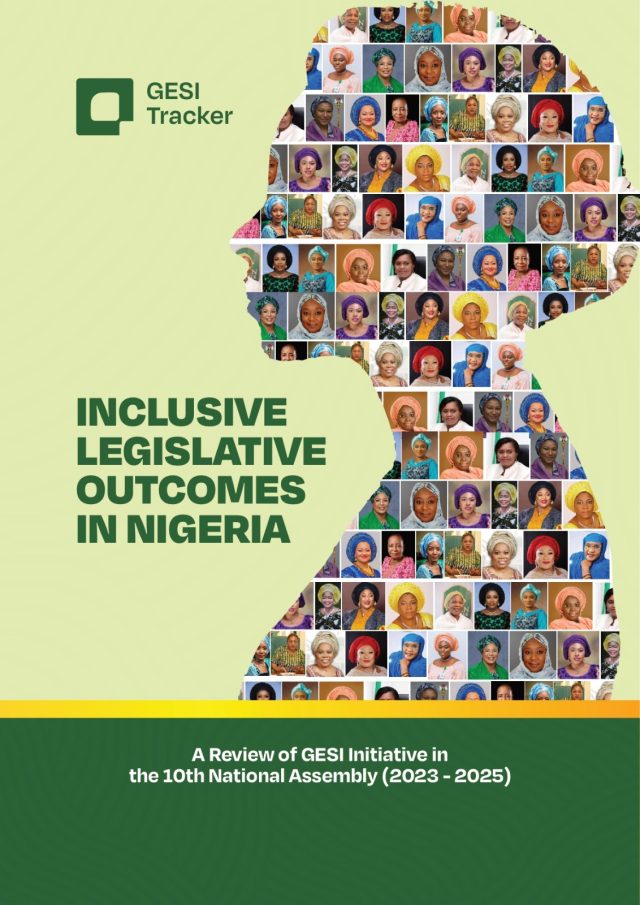
Chairman of the House of Representatives Committee on Media and Public Affairs, Rep. Akin Rotimi Jr., on Sunday launched the Gender, Equity and Social Inclusion (GESI) Compendium, a comprehensive review of inclusive legislative initiatives within Nigeria’s 10th National Assembly.
The compendium, which covers legislative activities of the 10th National Assembly between June 2023 and December 2025, was unveiled during a virtual public event on X themed: “Inclusive Lawmaking. Shared Prosperity” to mark the 2026 International Women’s Day (IWD).
Designed and developed by OrderPaper Nigeria, the country’s independent parliamentary monitoring organisation and policy think tank, the document tracks bills, motions, debates and oversight activities addressing issues affecting women, youth, persons with disabilities and other marginalised demographics.
Presenting the compendium on behalf of the Speaker of the House of Representatives, Tajudeen Abbas, the House Spokesperson Rep. Rotimi described the publication as an important contribution to strengthening inclusive governance and legislative accountability.
“On behalf of the Right Honourable Abbas Tajudeen, Speaker of the House of Representatives, it is my honor to present this very important piece of work, this research that has been done on a very important pillar of our legislative agenda,” Rep. Rotimi said.
“We receive it wholeheartedly and we’ll look at disseminating widely amongst all members that would help us to advance our legislative work. We thank you for your work and for your ongoing commitment to our legacy of excellence.”

The GESI compendium was curated by a technical team led by Jokpa Mudia Erusiafe, Programme Executive at OrderPaper, who explained that the publication consolidates weekly analyses produced by the organisation on gender and social inclusion within the legislature.
Erusiafe said the report seeks to answer critical questions about how inclusive Nigeria’s lawmaking processes are and whose voices are reflected in the laws shaping national development.
“The compendium goes beyond undocumented legislative activities. It tries to answer deep questions on how inclusive Nigeria’s lawmaking process is and what that means for women, youth, persons with disabilities, older persons and the marginalized,” she said.
According to her, the tracker examines how parliament engages policy concerns affecting different groups and follows the progress of legislative proposals from introduction, debate to resolution and/or passage.
“It aims to generate evidence on how inclusion-related issues are being addressed within parliamentary processes. It strengthens accountability by tracking not just legislative proposals but their progression and outcomes,” she added.
Findings from the compendium revealed persistent representation gaps within Nigeria’s legislative institutions, particularly for women.
Erusiafe noted that the National Assembly currently has only 16 women in the House of Representatives and four in the Senate, a situation she said limits diversity of perspectives in policymaking.
“Currently, we have a small proportion of women in the National Assembly with only 16 women in the House of Representatives and four women in the Senate,” she said, adding: “This limited representation affects the diversity of perspectives shaping legislative priorities.”
She further observed that the situation is more pronounced at the state level, where 15 state Houses of Assembly have no female legislator.
Despite the low representation, the report highlighted a trend where several gender-related bills and motions are sponsored by male lawmakers.
“A significant number of bills and motions addressing GESI issues are often being sponsored by male lawmakers. While this demonstrates important allyship within the parliament, it also reflects a broader structural challenge of limited representation among those most affected by these issues,” Erusiafe said.
She also cited progress in legislative efforts addressing sexual harassment in educational institutions, noting that the bill has now been passed by both chambers of the National Assembly however was yet to be assented to by the President, a progression previously achieved by the 8th and 9th Assemblies.
Also speaking at the event, Lydia Odeh, Chief of Party, Capacity Catalyst Consulting (CCC), highlighted the importance of evidence-based tools such as the GESI compendium in strengthening governance reforms and inclusive policymaking.
She noted that the research work provides credible data that helps stakeholders move beyond rhetoric and assess the actual commitment of institutions to inclusion.
“Tools like the GESI Tracker matter because they help us look beyond intentions and rhetoric to something much more valuable in governance, and that thing is evidence,” she said.
“It is evidence that helps us understand not only what institutions say about inclusion, but about what they actually do.”
Odeh outlined three key reflections on gender equality and social inclusion drawn from the report.
Her first reflection, she said, is that inclusion must move from visibility to institutionalisation within governance structures.
“One of the important insights from the GESI Tracker is that inclusion is becoming more visible in the legislative discourse,” she said.
“We see more debates about women’s representation, motions on disability inclusion, social protection and youth issues. This visibility matters, but visibility is not the same as institutionalisation because real progress happens when inclusion becomes embedded in the systems of governance.”
She explained that sustained progress occurs when legislative committees consistently prioritise such issues, reforms move through legislative timelines and budgets support commitments made by policymakers.
Odeh’s second reflection focused on representation in decision-making spaces, noting that while representation is crucial, it must be supported by broader coalitions to drive meaningful reform.
“Nigeria continues to face significant gaps in the representation of women and young people in legislative institutions, and representation is critical because lived experiences help shape policy priorities,” she said.
“But representation alone is not sufficient. What ultimately drives reform is the presence of coalitions among lawmakers, civil society organisations, researchers and development partners.”
According to her, such coalitions help ensure that reforms survive political transitions and are not dependent on a few individual champions.
Her third reflection emphasised the role of evidence in strengthening advocacy and accountability in governance.
“One of the most important lessons in governance reform is that evidence strengthens advocacy,” she said.
“Evidence allows civil society to move from general advocacy to informed engagements. It strengthens credibility in dialogues with policymakers and helps identify patterns that might otherwise remain invisible.”
However, she noted that evidence alone cannot drive policy reforms without political will and sustained civic engagement.
“Evidence is necessary, but it is not sufficient. Policy change ultimately depends on political will, sustained civic engagement, institutional incentives and public accountability,” Odeh said.
She also warned that as Nigeria gradually approaches another electoral cycle, attention may shift towards political campaigns, potentially weakening commitments to inclusive governance.
“This period often shifts political attention towards elections and creates a risk that inclusion commitments become symbolic rather than substantive,” she said.
“But this is also where evidence becomes even more important because it allows stakeholders to ask important questions — are commitments translating into laws, are those laws supported by budgets, and are these policies reaching the people they are meant to serve?”
Odeh concluded that democratic accountability requires continuous engagement and credible monitoring tools to track progress and highlight gaps in governance.
“Ultimately, inclusive governance is not measured by the promises institutions make, but by the outcomes they deliver,” she said.
The GESI compendium is expected to serve as a resource for policymakers, civil society organisations, researchers and development partners working to advance inclusive lawmaking and equitable development in Nigeria.
Access the GESI Compendium document here