
The National Assembly has given its green light to President Tinubu’s request to secure external loans totaling $6bn
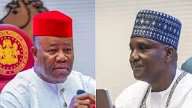
The Senate and the House of Representatives on Tuesday gave approval to President Bola Tinubu’s request to obtain external loans totaling $6bn.
The loans are aimed at strengthening the Federal Government’s financing of critical infrastructure projects across key sectors of the economy.
The request was communicated in two separate letters sent to Senate President Godswill Akpabio and Speaker of the House, Tajudeen Abbas. Both letters were read during plenary on Tuesday.
In the first correspondence, the president sought approval to obtain a $5bn loan from First Abu Dhabi Bank to “support Federal Government Funding and Fiscal Liquidity Management.”
In a second letter, Tinubu requested legislative approval for a $1bn facility from the United Kingdom Export Finance for the “rehabilitation of port projects in Nigeria,” specifically the Lagos Port Complex and Tin Can Island Port.
Following the reading of the letters by Akpabio and Abbas, the requests were referred to the Committee on Aids, Loans and Debt Management, chaired by Rep. Abubakar Nalaraba in the House and Senator Aliyu Wamakko, (APC Sokoto North), Chairman, Senate Committee on Local and Foreign Debts.
Both chambers subsequently resolved into the Committee of Supply to deliberate on the report.
Presenting the committee’s position, Rep. Nalaraba, who represents Awe/Doma/Keana Federal Constituency in Nasarawa State, stated, “The House should consider the report of the Committee on Aids, Loans and Debt Management on the request for approval to establish a structured total return swap an external financing programme of $5bn with First Abu Dhabi Bank, to support Federal Government funding and fiscal liquidity management and approve recommendations therein.”
He further explained that “the implementation of a total return swap transaction involving the Federal Government of Nigeria and First Abu Dhabi Bank in aggregate principal amount of up to $5bn together with the collateralisation of the transaction by the issuance of naira-denominated FGN Securities to First Abu Dhabi Bank PJSC (FAB) as collateral for the loan of up to 133.3% of the amount drawn.”
According to the committee, “the Federal Government of Nigeria [should] make margining payments to First Abu Dhabi Bank PJSC in dollars upon demand if, at any time, either due to fluctuations in the market prices of the Federal Government securities or as a result of movements in exchange rate or both, the value of the collateral issued to First Abu Dhabi Bank falls below the initial value at the time of issuance.”
Another recommendation stated “that the $5bn should be drawn down in tranches, with each tranche comprising a corresponding confirmation and other ancillary agreements (as may be required) between the Federal Government of Nigeria and First Abu Dhabi Bank.”
It also proposed the “Authorisation of the use of proceeds for budget implementation, development of key infrastructure projects, which are of priority to the administration, repayment of relatively more expensive domestic and external debts in the Federal Government of Nigeria’s public debt portfolio.”
Both loan requests were eventually approved unanimously after the both chambers reconvened from the Committee of Supply.