A bill seeking to establish the Nutritionists Registration Council of Nigeria has scaled second reading in the House of Representatives
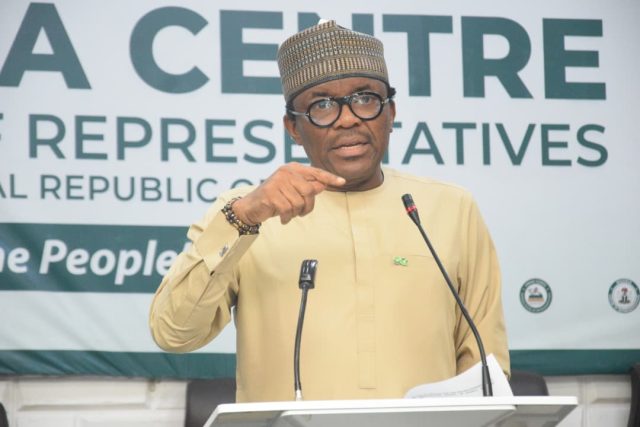
The House of Representatives on Thursday passed for second reading a bill seeking to establish the Nutritionists Registration Council of Nigeria, a proposed regulatory body aimed at professionalising the nutrition sector, curbing quackery and strengthening the country’s response to malnutrition and food insecurity.
The proposed legislation, titled “A Bill for an Act to Provide for the Establishment of the Nutritionists Registration Council of Nigeria and for Related Matters,” was sponsored by Rep. Chike Okafor (APC, Imo).
Leading the debate, Rep. Okafor described the bill as “a necessary legislative response to a ticking time bomb” posed by rising malnutrition and food insecurity, warning that the absence of a regulatory framework for nutritionists had weakened efforts to improve public health despite significant government investments.
“This bill is not merely a piece of legislation; it is a necessary legislative response to a ‘ticking time bomb’ of malnutrition and food insecurity that threatens our national development and the wellness of Nigerian citizens,” he said.
The lawmaker explained that the proposed council would be self-funding, similar to other professional regulatory bodies, and stressed that it would not conflict with the proposed Dietitians Council Bill.
According to him, both professions perform distinct but complementary roles within the healthcare system.
“It is important we note that this bill is not in competition with the Dietitians Council bill. It is both mutually reinforcing, but clearly different disciplines,” Okafor said.
He explained that while dietitians provide clinical nutrition services for managing diseases such as diabetes and kidney-related illnesses in hospitals, nutritionists focus on public and community nutrition, maternal and child nutrition, food and nutrition policy, nutrition research and programme implementation.
The sponsor argued that Nigeria currently lacks legal protection for the title “nutritionist,” creating room for unqualified individuals to practise and putting public health at risk.
“We must note the unregulated gap. Currently, the title ‘Nutritionist’ is not legally protected in Nigeria. This has led to what is described as the ‘ugly balkanization of the profession,’ leaving it vulnerable to the invasion of quacks,” he said.
According to Okafor, regulating the profession would enable Nigerians to distinguish between clinically trained dietitians responsible for disease management and nutritionists whose expertise lies in preventive healthcare, food systems and overall nutritional wellbeing.
Citing findings from the 2023/2024 National Demographic Health Survey, the lawmaker lamented that child malnutrition, stunting and maternal anaemia continue to rise despite billions of naira invested in nutrition programmes.
“Our nation faces a stark reality. Despite years of intervention, the 2023/2024 National Demographic Health Survey reveals a worrying trend: child malnutrition, stunting and maternal anaemia are on the increase,” he said.
“It is a matter of concern that while billions of naira, including substantial loans like the $232 million ANRiN programme, are invested in nutrition, we are still battling with poor outcomes and an obvious disconnect between accountability, resource allocation and successful policy implementation.”
He attributed the poor outcomes largely to the absence of a statutory framework to regulate nutrition practice in the country.
“The answer to this question is simply the absence of a regulatory framework to professionalise the practice of nutrition and nutrition-related matters in Nigeria,” he said.
Okafor said the proposed legislation would establish the Nutritionists Registration Council of Nigeria to regulate, control and standardise nutrition practice nationwide through the registration and licensing of qualified practitioners.
He noted that the council would maintain a public register of nutritionists and nutrition assistants, accredit educational institutions and training curricula, investigate professional misconduct through disciplinary panels, and collaborate with federal and state health authorities, the National Universities Commission and international partners on nutrition education and sustainable food systems.
He added that the legislation would ensure nutrition professionals are effectively deployed in hospitals, primary healthcare centres, correctional facilities and schools, while promoting scientific innovation in food systems and public health.
“This bill is a necessary instrument to professionalise the nutrition workforce, protect public health and ensure accountability and value for the massive investments in nutrition,” Rep. Okafor said.
“It is about safeguarding our future by ensuring our people have access to the best possible advice on what to eat for optimum health. I urge all my honourable colleagues to support this bill for the sake of millions of Nigerians suffering from nutrition-related challenges.”
Following the debate, the House unanimously voted in support of the bill, allowing it to scale second reading before referring it to the relevant committee for further legislative action.