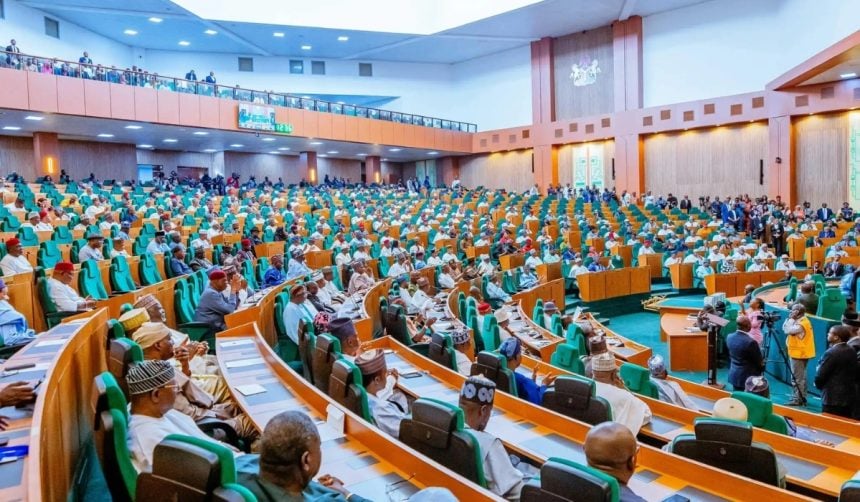
The National Assembly has outlined sweeping reforms introduced in the Electoral Act, 2026
The National Assembly has outlined sweeping reforms introduced in the Electoral Act, 2026, describing the new law as a major step toward strengthening Nigeria’s electoral integrity ahead of the 2027 general elections.
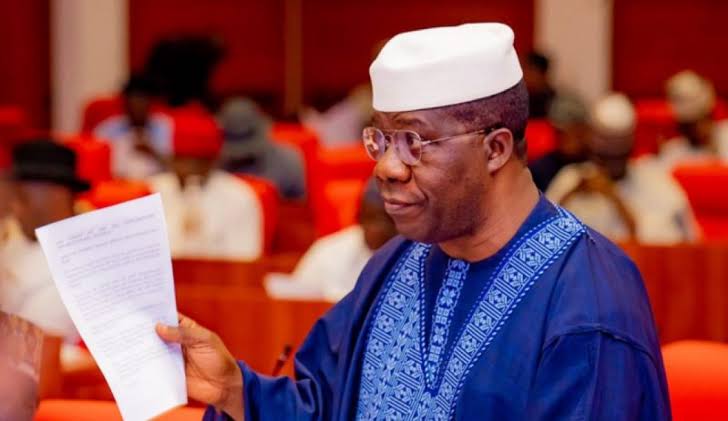
In a statement issued on Sunday by his Directorate of Media and Public Affairs, Senate Leader, Opeyemi Bamidele, said the law was the product of extensive consultations spanning two years and involving the Independent National Electoral Commission (INEC), civil society organisations (CSOs), the Office of the Attorney-General of the Federation (OAGF), and development partners.
According to him, the National Assembly harmonised versions of the Electoral Bill 2026 passed by both chambers—particularly on Clause 60(3)—before transmitting it to President Bola Ahmed Tinubu for assent to avoid a constitutional crisis ahead of the 2027 general elections.
Presidential Assent and CSO Concerns
Bamidele noted that the president signed the bill into law within 24 hours of its transmission, completing what he described as a rigorous two-year reform process.
While some CSOs questioned the speed of assent, the senate leader insisted that the process was inclusive and transparent.
“The making of the new regime is a collective work that involves nearly all critical stakeholders. The National Assembly worked with such different stakeholders as OAGF, CSOs, INEC and our development partners, among others, before we eventually completed the process,” he said.
“Its outcome is not a unilateral effort of the parliament, but of Nigerians at large.”
INEC Financial Autonomy
Bamidele explained that Section 3 of the Act establishes a dedicated fund for the Independent National Electoral Commission, guaranteeing financial autonomy, operational stability and administrative continuity.
He said the provision mandates the release of election funds at least six months before general elections and empowers INEC to review result declarations made under duress or in violation of electoral procedures.
BVAS and Electronic Result Transmission
Under Section 47 of the Act, all presiding officers are required to use the Bimodal Voter Accreditation System (BVAS) or any other INEC-approved technology for voter accreditation.
Section 60(3) mandates electronic transmission of election results to the INEC Result Viewing Portal (IReV), while Section 60(6) prescribes penalties for violations.
“A six-month imprisonment or a fine of ₦500,000 or both is recommended against any presiding officer who willfully frustrates the electronic transmission of election result,” Bamidele said.
He clarified that IReV is meant to enhance transparency, not serve as a collation platform, and that manual transmission using Form EC8A is only permitted where electronic transmission fails due to communication challenges.
Stiffer Sanctions for Electoral Officers
According to Bamidele, Section 74(1) mandates Resident Electoral Commissioners (RECs) to release certified true copies of electoral documents within 24 hours after payment.
Failure to comply, he said, attracts a minimum jail term of two years without an option of fine.
Direct and Consensus Primaries, Digital Party Registers
The senate leader said the Act abolishes indirect primaries, retaining only direct and consensus primaries under Section 84 to encourage wider participation and curb monetisation of the process.
Section 77 mandates political parties to maintain digital membership registers, issue membership cards, and submit the registers to INEC at least 21 days before primaries, congresses or conventions.
“Any political party that fails to submit the membership register within the stipulated time shall not be eligible to field a candidate for that election,” he stated.
Upward Review of Campaign Spending
Under Section 92 of the Act, election spending limits were reviewed upward, raising the cap for the presidential election from ₦5 billion to ₦10 billion and governorship from ₦1 billion to ₦3 billion.
Spending limits for the National Assembly, state assemblies, area councils and councillorship positions were also significantly increased.
Stronger Penalties for Vote Buying
Bamidele said Section 125 stiffens penalties for vote buying, impersonation and result manipulation, prescribing a two-year jail term or fines ranging from ₦500,000 to ₦2 million, or both.
Inclusive Provisions and Party Accountability
He further noted that the Act mandates gender-sensitive queue arrangements where culturally required, provides support mechanisms for persons with visual impairment, and imposes a ₦10 million fine on political parties that fail to submit accurate audited returns within the stipulated period.
Strengthening Nigeria’s Democratic Process
Summing up, the senate leader said:
“The Electoral Act, 2026 represents a consolidation and refinement of the country’s electoral governance framework. In all, the Act seeks to enhance electoral credibility, reduce disputes, and strengthen democratic governance in Nigeria.”
“The Act emphasises financial and operational independence of INEC; technological integration with procedural safeguards; transparency in collation and declaration; stricter penalties for electoral offences and stronger regulation of political parties.”