
Deputy Speaker Benjamin Kalu says reliable telecommunication connectivity is key to financial inclusion, education, healthcare as the Federal Government commissions tower to connect unserved and underserved communities in Abia
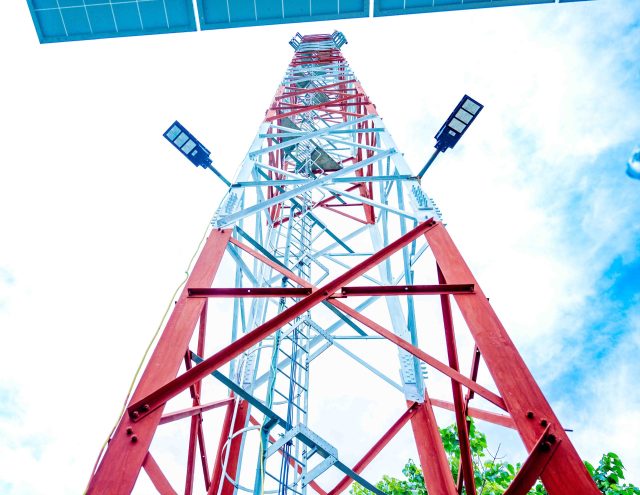
The Federal Government has commissioned the first telecommunications tower under the National Universal Communications Access Programme (NUCAP) in Bende, Abia State, as part of efforts to connect about 20 million Nigerians without access to connectivity.
The Minister of Communications, Innovation and Digital Economy, Dr Bosun Tijani, commissioned the facility along the Umuahia–Ohafia road on Friday.
Speaking at the event, the Deputy Speaker of the House of Representatives, Benjamin Kalu, said reliable telecommunications connectivity was essential to expanding financial inclusion, improving access to education and strengthening healthcare delivery in rural communities.
Kalu, who represents Bende federal constituency in the National Assembly, said the project would help bridge the digital divide and create economic opportunities for residents of underserved communities.
He noted that while reliable network services might appear ordinary to people in well-connected areas, their absence could prevent rural residents from accessing essential services and economic opportunities.
“For those who have always enjoyed reliable network service, connectivity may seem ordinary. For a rural trader whose payment repeatedly fails, a student who cannot join an online lesson, or a family struggling to contact a doctor, it is anything but ordinary. It can determine whether an opportunity is secured or lost.
“Where a person lives should not determine the limits of what that person can become. When the network fails, a trader may be unable to confirm payment. A farmer may struggle to receive money for produce. A household may be unable to access funds sent by a relative. Reliable connectivity helps bring banking closer to the unbanked.”
The deputy speaker said dependable telecommunications infrastructure would enable rural traders, farmers and households to benefit from mobile banking, electronic transfers, agent banking and other digital financial services.
He added that affordable services, financial literacy and consumer protection would further encourage rural residents to participate in the formal economy.
On education, Kalu said the infrastructure would enable pupils to access online lessons, learning materials and tutoring, while helping teachers improve their skills through digital resources.
“Our children should be able to receive online tutoring, access learning materials and participate in lessons beyond their immediate environment. Our teachers should be able to improve their skills and draw on wider teaching resources.
Our young people should be able to apply for scholarships, acquire digital skills and explore opportunities without travelling elsewhere simply to find a signal. The talent is already here in Bende. We must provide the connections through which that talent can grow,” he said.
Kalu also highlighted the potential of the facility to improve healthcare delivery by enabling health workers to consult specialists, exchange information securely and coordinate referrals for patients in rural communities.
He said reliable connectivity would also strengthen civic participation by giving citizens access to accurate information and channels to communicate with their representatives, particularly as the 2027 general election approaches.
“Citizens need access to accurate information. Communities need channels through which to raise concerns, seek clarification and engage their representatives. Electoral and emergency personnel need reliable communication. These towers must serve the whole community,” he said.
The deputy speaker described Bende’s location and proximity to neighbouring states as factors that make improved telecommunications infrastructure important for trade, mobility and relationships between communities.
He disclosed that 16 additional locations requiring connectivity interventions had been identified in the constituency.
Kalu called on the Ministry of Communications, Innovation and Digital Economy and its partners to work with his office and community leaders to verify the locations, assess network coverage gaps and develop a programme for extending services to the affected areas.
He also stressed the need for regular maintenance, adequate power supply and prompt repairs to ensure the facilities deliver reliable services.
Expressing appreciation to President Bola Tinubu and the ministry for the project, Kalu said the intervention would support efforts to integrate more Nigerians into the digital economy.
“On behalf of the people of Bende federal constituency, I sincerely thank His Excellency, President Bola Ahmed Tinubu, GCFR, for his administration’s commitment to expanding digital infrastructure and bringing more Nigerians into the digital economy.
“I commend the Federal Ministry of Communications, Innovation and Digital Economy, the implementing agencies, network providers, engineers and all partners responsible for this intervention. Thank you for choosing Bende. Thank you for recognising the needs and potential of our people”, Kalu said.
He also commended Abia State Governor, Alex Otti, for supporting federal government initiatives and other development projects in the state, pledging continued cooperation to accelerate development.
Kalu urged traditional rulers and presidents-general of town unions to protect the telecommunications infrastructure as critical national assets.
Earlier, Tijani said the NUCAP initiative was designed to connect approximately 20 million Nigerians who currently lack access to telephone and internet services.
“President Bola Ahmed Tinubu has given us a clear mandate: work towards bringing every Nigerian online. Through NUCAP, we are delivering 3,700 telecommunications towers across Nigeria. Today, we are commissioning the first of these sites here. More will follow across the country in the coming days, weeks and months,” the minister said.
He explained that the towers were intended to address the connectivity challenges faced by farmers, traders, families and young people in communities without adequate network coverage.
Using a tree as an analogy, Tijani said the benefits of the infrastructure would extend beyond its immediate commissioning, creating opportunities for future generations.
He added that the ministry would continue working with Kalu, network operators and community leaders to extend coverage to other unconnected parts of Bende Local Government Area.
Highlights of the event included a live demonstration of e-learning at Bende Grammar School using the newly deployed infrastructure and the distribution of mobile phones to constituents.