
The House of Representatives has called on the Federal Government to prevail on 22 state governments to prioritise the payment of outstanding pensions
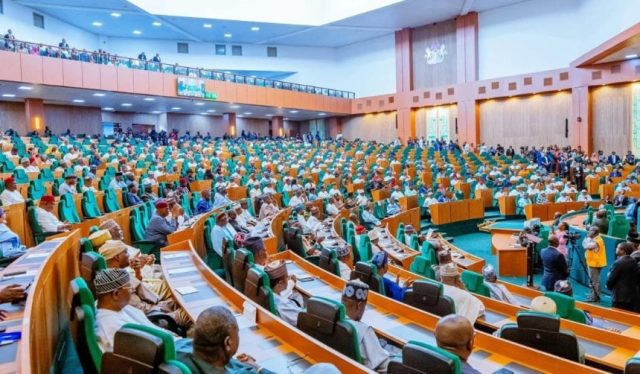
Lawmakers in the House of Representatives were divided on Tuesday over whether the National Assembly should intervene in the failure of state governments to pay outstanding pensions to retired workers, with some questioning its constitutional powers to intervene in state matters.
While some members argued that pension obligations at the state level fell within the jurisdiction of state governments and their Houses of Assembly, others insisted that the National Assembly had a responsibility to speak out and recommend solutions to the plight of pensioners across the country.
The disagreement followed a motion of urgent public importance sponsored by Rep. Adesola Adebayo (APC, Lagos), calling on the Federal Government to prevail on state governments owing pensioners to clear their outstanding retirement benefits.
The motion also sought an investigation into the failure of 22 states to pay retirement benefits regularly, amid concerns that thousands of elderly retirees were being subjected to hunger, poverty and preventable deaths because of unpaid entitlements.
Moving the motion, Rep. Adebayo cited a newspaper report indicating that only 14 of Nigeria’s 36 states pay pensions regularly, while the remaining 22 owe retirees several months or, in some cases, years of entitlements.
Adebayo described pensions as an earned right rather than a privilege or charity, arguing that Nigerians who had devoted between 30 and 35 years to public service deserved to receive their benefits without unnecessary hardship.
He expressed concern that many pensioners aged between 70 and 90 were dying in poverty because they could not afford food, medication, rent and other basic necessities.
The lawmaker also raised concerns over prolonged pension verification exercises, which he said forced elderly retirees to queue for days under harsh weather conditions, with some reportedly collapsing and dying in the process.
He argued that the non-payment of pensions violated constitutional provisions and undermined human dignity, while creating anxiety among serving public workers who could begin to see retirement as a death sentence.
Adebayo said, “The House notes, with grave concern, a scandalous report published by a public newspaper revealing that only 14 out of the 36 states of the federation, excluding the Federal Capital Territory, pay pensions regularly to their retired workers, while the remaining 22 states owe pensions several months and, in some cases, several years.
“The House also notes that the pension is not a privilege, favour, or charity, but a defined wage, a constitutional right, and a moral debt owed to citizens who spent their productive lives, 30 to 35 years, serving their fatherland as teachers, nurses, civil servants, police officers, soldiers, and other public servants.
“The House further notes that the 1999 Constitution (as amended) explicitly provides that a person who has held office in the public service of the federation or a state shall be entitled to pensions and gratuity as prescribed by the National Assembly or the House of Assembly of the state, and that such pensions shall not be delayed or altered to the disadvantage of the pensioner.”
He further lamented that several states had failed to remit employer and employee contributions, fund accrued rights and implement relevant provisions of the Pension Reform Act, leaving thousands of retirees without access to their retirement savings accounts.
Lawmakers disagree over jurisdiction
Contributing to the debate, Rep. Mark Esset (APC, Akwa Ibom) opposed the motion, arguing that pension obligations involving state workers were matters for state governments and their respective Houses of Assembly.
He cautioned against any suggestion that the Federal Government could deduct money from states’ allocations to settle outstanding pension liabilities, describing such an approach as unconstitutional.
Esset urged the House to concentrate on pension challenges facing military personnel, who, he said, had repeatedly protested over their entitlements.
“I understand the patriotism of the mover of the motion but these are purely state matters. Emotions are not enough for this motion to be heard by the House. The issue of pensions at the state level are purely for the State Houses of Assembly to handle,” he said.
Similarly, Rep. Dominic Okafor (APGA, Anambra) cautioned against generalising the allegations against all states, noting that some governors had fulfilled their pension obligations.
He cited Anambra State, which he said had cleared its pension liabilities, arguing that the motion should distinguish between states that had failed to pay and those meeting their responsibilities.
However, Rep. Billy Osawaru (APC, Edo) urged lawmakers not to discard the motion, proposing amendments to remove provisions he considered outside the constitutional jurisdiction of the National Assembly.
He said lawmakers should consider the suffering of elderly Nigerians who had spent decades in public service but were being subjected to difficult conditions to access their retirement benefits.
“We know what our fathers are going through. We know what it means for a man to work for 35 years only to be called to stand in the sun, under the sun, to review, to keep reviewing until he can’t stand it no more.
“So, Mr Speaker, instead of killing this beautiful motion, I would like to go in for amendments. I would like to take out areas our mandates don’t cover and go with those areas that our mandates cover,” he said.
The Deputy Speaker, Rep. Benjamin Kalu, who presided over the plenary, subsequently directed lawmakers to examine the House Standing Orders to establish the jurisdiction of the Committee on Pensions.
Reading the committee’s mandate, Kalu noted that it was empowered to examine pension-related issues across the public service, recommend measures to ensure timely payment of retirement benefits and investigate employers’ failure to meet their pension obligations.
Its responsibilities, he said, included oversight of the National Pension Commission (PenCom), the Military Pension Board and other relevant institutions.
Also supporting the motion, Rep. Terseer Ugbor (APC, Benue) urged the House to allow it to proceed, arguing that the suffering of pensioners across the country warranted urgent legislative attention.
Another lawmaker, Zainab Gimba, cited Section 210 of the 1999 Constitution, as amended, which protects the pension rights of persons who have served in the public service of a state.
She particularly drew attention to Section 210(2), which provides that pension benefits due to a person under the law shall not be withheld or altered to the person’s disadvantage, except as permitted by law.
Gimba argued that although state pension liabilities must be distinguished from federal obligations, the National Assembly could debate the issue, make recommendations and encourage state legislators to exercise the necessary oversight.
“The law says that pensioners should be paid both at the national and state level. It is an entitlement protected by the Constitution. We must not forget that the condition of pensioners today can cause a humanitarian crisis,” she said.
The House Leader, Rep. Julius Ihonvbere, also defended the motion, insisting that lawmakers should not shy away from addressing the plight of Nigerians simply because some of the affected matters fell within the jurisdiction of state governments.
Ihonvbere maintained that members of the National Assembly represented Nigerians across the country and had a responsibility to speak out when citizens were subjected to hardship.
He argued that the House could intervene through motions, investigations and recommendations without necessarily usurping the constitutional powers of state governments.
Recalling previous interventions by the Ninth Assembly in matters involving state governments, he said the parliament had a responsibility to engage relevant authorities where circumstances demanded it.
“We need to be very careful not to diminish our powers and responsibilities by hiding behind some of the local sections, under the Standing Order of the Constitution, not to perform our duties.
“Technically, there is nothing in which this House or the National Assembly cannot engage in, whether they are in the local government, the state, or anywhere, because we represent the entire country,” he maintained.
He also called on governors yet to clear outstanding pension liabilities to fulfil their obligations, insisting that the availability of public funds should not be an excuse for abandoning retired workers.
House adopts motion, orders investigation
Following the debate, the House unanimously adopted the motion and resolved to call on the Federal Government, through the Office of the Secretary to the Government of the Federation, to prevail on state governments to prioritise the payment of outstanding pensions.
It also mandated its Committee on Pensions to interface with PenCom and engage state governments to ascertain the challenges responsible for irregular pension payments, identify possible solutions and report its findings to the House.
The investigation is expected to provide lawmakers with a clearer picture of pension arrears across the affected states, as well as the institutional and financial challenges responsible for the delays.