
Stakeholders from across government, civil society, academia and media have called for stronger transparency and accountability in the management of climate adaptation finance in Nigeria.
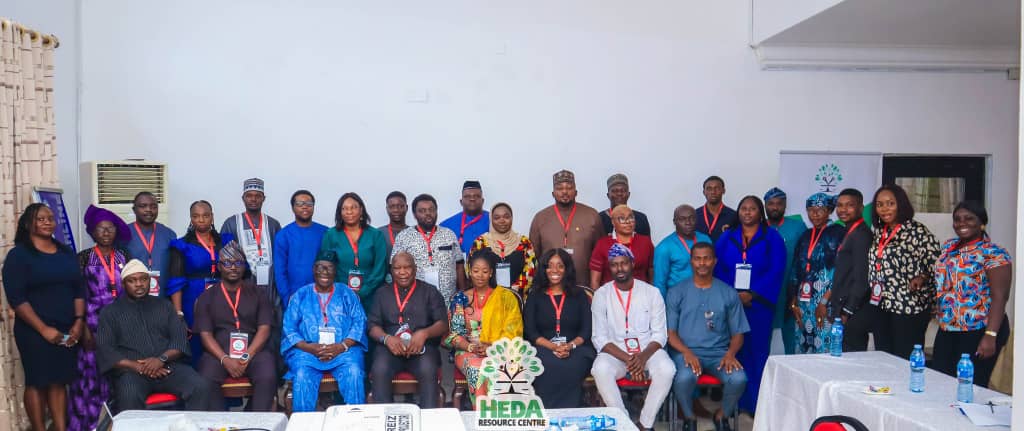
This call came during a stakeholders consultative dialogue on accountability in climate Adaptation finance in Nigeria and validation session of the report titled “Enhancing Accountability in Climate Adaptation Finance in Nigeria: Synthesis Report and Case Studies on the Ecological Fund.”
The dialogue was organised by the Human and Environmental Development Agenda (HEDA Resource Centre) in partnership with IMANI Centre for Policy and Education (Ghana) at Reiz Continental Hotel, Abuja.
The dialogue provided a platform for experts and practitioners to discuss how Nigeria can strengthen oversight in the use of climate funds, particularly the Ecological Fund, which remains one of the country’s key adaptation financing mechanisms.
In his opening remarks, Mr. Huzi Mshelia, who chaired the session, emphasized the urgent need for improved coordination among government institutions, better data transparency, and stronger citizen participation to ensure that climate finance delivers real impact.
Presenting the validated report, Prof. Emmanuel Oladipo, the Lead Researcher, outlined the study’s findings, noting that while Ecological Fund projects are widespread and often relevant, many are undermined by incomplete execution, weak consultation with communities, and poor oversight.
He recommended stronger expenditure verification mechanisms, capacity building for state-level institutions, and integration of community voices in project planning and monitoring.
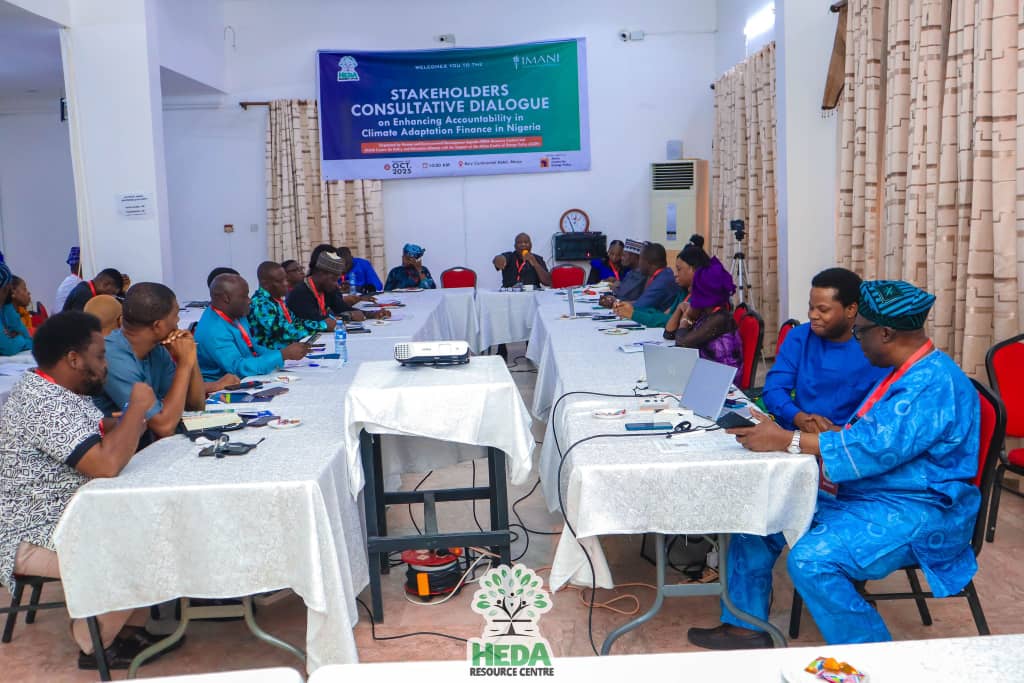
A panel session moderated by Mr. Huzi Mshelia, with panelists including Solomon Adoga (CISLAC), Hyeladzira James Mshelia (Connected Development), Adeyemi Okediran (Dataphyte Foundation), and Tengi George-Okoli (Natural Resource Governance Institute).
Panelists discussed the need for open data systems, participatory monitoring, and a coordinated national framework for climate adaptation finance. They also raised concerns over limited access to information and the growing debt implications of climate-related concessional loans.
Following the panel, participants contributed practical suggestions to strengthen the report, including:
- Enhancing community participation and ownership of adaptation projects.
- Improving access to climate finance information and public awareness.
- Establishing clear reporting mechanisms for irregularities in project delivery.
- Incorporating local knowledge and gender perspectives in adaptation planning.
In her closing remarks, Prof. Adenike Ogunshe commended HEDA for facilitating a timely and evidence-based dialogue. She announced that all comments and recommendations gathered during the session would be compiled into a paper by December 2025, co-owned by participants, to guide advocacy and engagement with policymakers.
The dialogue underscored a shared commitment among stakeholders to ensure that climate adaptation finance in Nigeria is transparent, inclusive, and responsive to the needs of vulnerable communities.