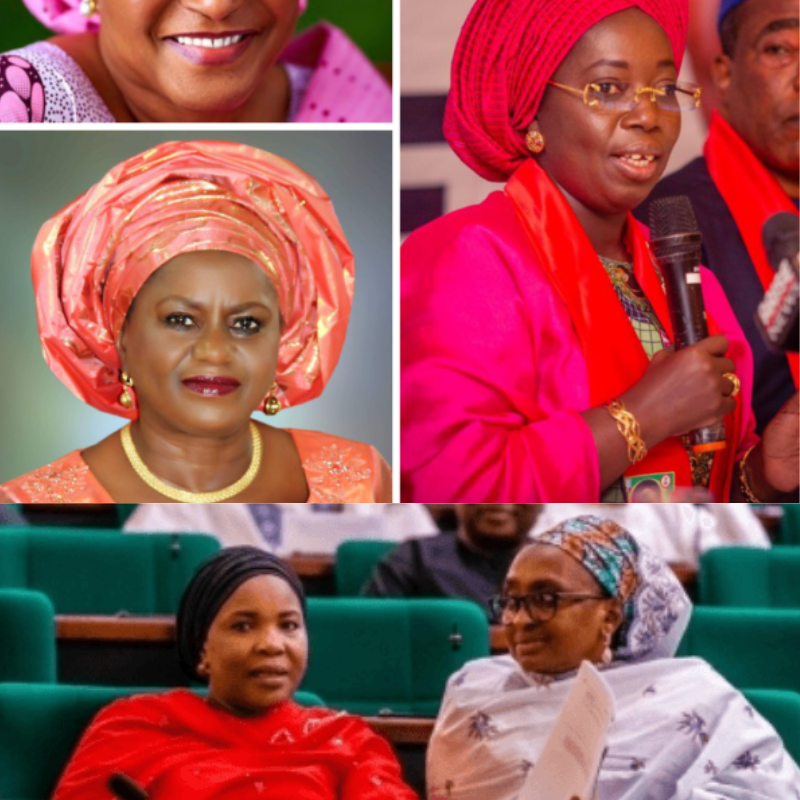


Recent protests in the National Assembly have drawn fresh attention to the state of gender equality and social inclusion within the National Assembly

One of such protests is the exclusion of Sen. Natasha Akpoti-Uduaghan (PDP, Kogi) from the Senate committee on North Central Development Commission (NCDC) meeting. The second is the organised protests by women’s groups at the National Assembly demanding passage of the Reserved Seats for Women Bill. Both protests highlight ongoing tensions between formal representation and substantive inclusion.
Exclusion from committee, inclusion in protest
Sen. Natasha was reportedly excluded from the North Central Development Commission (NCDC) meeting by her colleagues, a development that sparked visible protest from the senator herself. While committee memberships and attendance protocols are internal matters, the optics are not trivial: Sen. Natasha is one of only four women in the Senate, and this repeated sidelining raises questions about how sectional representation and regional interests are reconciled with gender inclusion in legislative spaces.

Her exclusion came just as several development projects and regional priorities, including those tied to infrastructure and investment in the north central zone, were under discussion. For an elected representative to be shut out of deliberations that touch on her constituency and region undermines not just her mandate, but broader norms of inclusion within committee processes.
This incident echoes last week’s budget defence clash, where Sen. Natasha was visibly shut down during questioning session of the Ministry of Mines and Steel Development. Taken together, these moments are not isolated procedural hiccups, they signal patterns in how women lawmakers may experience barriers to full participation in critical decision-making arenas.
Women protesters and electoral urgency
On the same day that tensions over committee participation were unfolding, women’s groups rallied at the National Assembly to press for passage of the Reserved Seats for Women Bill. Their protest was sparked in part by the recent announcement of the 2027 election timetable, with Presidential and National Assembly elections set for February 20, 2027, and Governorship and State Assembly elections scheduled for March 6, 2027.

The protests underscored growing frustration that, despite years of advocacy, the bill that would guarantee special seats for women in Nigeria’s legislatures is still languishing in the corridors of power. Women activists framed their demand as a matter of democratic urgency, not just gender equity, arguing that, with electoral timelines now public, the National Assembly must act swiftly to enshrine mechanisms that meaningfully increase women’s political representation.
Without structural reforms such as reserved seats, women’s participation in decision-making processes will remain marginal even as elections approach and campaign narratives intensify.
The GESI implications
These parallel developments: the exclusion of a sitting female senator from a regional committee meeting and the public protest for reserved seats, converge on one central issue: the fragility of women’s political participation in Nigeria.
Firstly, they expose the gap between constitutional presence and practical power. Nigeria may have women in the Senate, but when those few elected women encounter procedural exclusion or marginalisation in committee structures, it reveals how institutional norms can quietly restrict influence. Inclusion, in this sense, is not only about entry into political office; it is about access to decision-making spaces where real policy directions are shaped.
Secondly, there is a symbolic dimension that matters deeply. When women leaders are seen to be excluded from committees or forced to protest for institutional recognition, it sends a broader message to aspiring women politicians and young girls observing the political system. Representation becomes precarious rather than empowering. This has long-term implications for political recruitment, confidence, and participation across generations.
Thirdly, the incidents reinforce the argument that voluntary political goodwill alone has not produced equitable outcomes. The fact that women’s groups are mobilising publicly for constitutionally guaranteed seats suggests growing impatience with incremental progress. When electoral dates are fixed, the window for reform narrows. Structural solutions such as reserved seats move from theoretical debate to urgent necessity.
And finally, these events underscore that inclusion must be institutionalised, not personalised. Individual resilience, assertiveness, or confrontation should not be the mechanism through which women secure space in governance. Systems and rules must guarantee equitable participation regardless of personality, seniority, or political alliances.
As Nigeria moves closer to the 2027 elections, the question is no longer whether women are present in politics. The question is whether the political system is structured to allow them to function fully, safely, and effectively within it.
Inclusion is not simply about having women present in legislative chambers; it is about ensuring that their presence translates into real voice, influence, and access to decision-making spaces. When senators are excluded from meetings, or when women’s groups have to take to the streets to demand structural reform, it suggests that institutional practices still lag behind representational milestones.